
PROJECTS / DOCUMENTS
Bengt Nybelius, together with Risto Keskitalo, the founder of the European Athlete as Student Network (EAS), was a brilliant mind, who settled the objectives and the structure of the organisation in 2004. He passed away in 2011, and EAS decided to establish a scholarship to carry on the legacy of his work. Therefore, we are happy to announce the Call for Paper of the “2026 Bengt Nybelius Scholarship”
Aims of the Bengt Nybelius Scholarship
The aim of the Bengt Nybelius Scholarship is to facilitate the integration of outstanding scholars and young researchers in the area of dual career.
Eligibility to the Bengt Nybelius Scholarship
Regardless the nationality and country of residence, researchers up to 40 years of age could be eligible for the Bengt Nybelius Scholarship.
Requirements to apply to the 2026 Bengt Nybelius Scholarship
Applicants must submit as first author an original manuscript related to the scope of EAS. Manuscripts must not contain information presented in other manuscripts published elsewhere.
The manuscript should be written in English, between 15 and 30 pages double-spaced in Arial font size 11, including title page, abstract, introduction, methods, results, discussion, conclusions, acknowledgments (if applicable), references, tables, figures and legends, and statement of conflicts of interest.
Manuscripts must be accompanied by a cover letter, stating clearly why the work is considered suitable for the Bengt Nybelius Scholarship and explaining the importance of the study.
Selection of the 2026 Bengt Nybelius Scholarship Winner
The Board of EAS will consider the quality of submitted manuscripts and notify the winner by July 31, 2026. The winner will have to summarize her/his work with a 15-minute oral presentation in English at the 2026 Annual EAS Conference in Oulu, Finland, October 5-7.
EAS will arrange travel, accommodation, and registration of the Bengt Nybelius Scholarship winner.
Application to the 2026 Bengt Nybelius Scholarship
To be considered for the 2026 Bengt Nybelius Scholarship applicants before July 1th, 2026 (midnight CET) must submit by e-mail to info@dualcareer.eu, including:
- – A copy of the manuscript (PDF)
- – An abstract, 1 page, about 2400 characters
- – Curriculum vitae and list of publications (if there are others)
Requests of further information, if needed, could be addressed to info@dualcareer.eu. We are looking forward to receiving your application!
On behalf of the Board of EAS
Laura Capranica
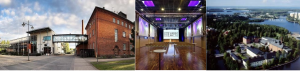
As part of the strategic and operational preparation for the 23rd Annual Conference of the European Athlete Student – Dual Career Network (EAS), three members of the EAS Executive Committee, Ole Keldorf, António Figueiredo,and Risto Keskitalo (local organizer), conducted an official institutional visit to Oulu, Finland, the European Capital of Culture 2026 (https://www.ouka.fi/en).
Risto Keskitalo, played a fundamental role in facilitating communication between the EAS delegation and the local organizing partners in the organizational process of the conference, allowing for an in-depth evaluation of local conditions, facilities, and partnerships, and ensuring that all logistical, academic, and institutional requirements will be fully aligned with the standards and expectations of the EAS community.
To finalize the terms of the agreement between the European Athlete Student – Dual Career Network and the Kastelli Upper Secondary School (https://www.ouka.fi/kastellin-lukio), a formal working meeting was organized with members of the local organizing committee, Director Pekka Fredriksson and Principal Jani Syrjälä, who represent key educational and municipal stakeholders in Oulu. The discussions were characterized by a strong spirit of collaboration, mutual trust, and a shared commitment to promoting excellence in dual career development for athlete students across Europe.
The Hotel Lasaretti (https://lasaretti.com/en/) has been selected to host the 23rd EAS Annual Conference, which is situated in a unique and culturally rich environment, combining modern conference infrastructure with a distinctive architectural and historical character. Oulu also offer several accommodation solutions capable of hosting the diverse group of conference participants, guaranteeing accessibility, service quality, flexible booking options, and proximity to the conference venue.
The outcomes of this visit reinforce Oulu’s position as an outstanding host city for the EAS Annual Conference and highlight the city’s strong engagement with dual career policies and practices. With preparations now firmly underway, the EAS community looks forward with great anticipation to gathering in Oulu in October 2026 for what promises to be a high-quality, impactful, and inspiring conference dedicated to the advancement of dual career support for athlete students across Europe.
Dear Dual Career Friends and Colleagues,
The best of 2025 may revitalize our efforts in support of the dual career of the sportspersons!
International Collaborations
During this year, fruitful partnerships with the European Parliament, the European Commission, the Council of Europe, the International Military Sports Council (CISM), and Sport 4 Impact have been consolidated through the participation in important events. EAS attended the EU Sport Forum 2025 in Krakow, Poland, the 2025 EPAS Council of Europe Annual Meeting of the Governing Board and Consultative Committee in Strasbourg (France), the European Parliament consultations for the EU policies in shaping the European Sport Model and the implementation of the ERASMUS+ Programme for 2028-2034 in Brussels (Belgium). During the 2025 EAS Annual Conference in Riga (Latvia), a Memorandum of Understanding with the European Non-Governmental Sports Organisation (ENGSO) was signed. Finally, EAS has been recognized as an official partner of the European Week of Sport (EWoS).
Participation in International Conferences
Oral presentations and distribution of the projects’ flyers are deemed crucial to disseminate the aims and progresses of European Dual Career to scholars and policy makers. In addition to its 2025 Annual Conference (University of Latvia, Riga, Latvia), EAS was invited to contribute to the conference of the ERASMUS+Sport SAMEurope project (INSA Lyon, France), the Italian Scientific Society of Movement and Sports (SISMES, Parma, Italy), the Polish University Sport Conference (Warsaw, Poland), and the First International Symposium on Mentoring for High-Performance Student-Athletes (Universidade da Coruña, Spain). Finally, the EAS President, Laura Capranica, received a Recognition Plaque from the Brazilian Association of Dual Career for the EAS commitment to the advancement of dual career at international level.
Virtual EAS Cafè
In 2025, EAS organized five successful virtual cafes with experts and testimonials related to “From talent identification to talent support”, “Sport Innovation: Promoting employability of student-athletes and sport professionals”, “Dual Career Mentors and Mentees getting ready for the next academic year”, “Celebrating the 10th anniversary of the #BeActive programme and the 2025 European Week of Sport (EWoS) ”, “XXI century skills as a bridge between sport and employability”. Other interesting topics will be scheduled in spring, summer, fall, and winter 2026.
Finalized EU-funded ERASMUS+Sport Collaborative Partnership
DC Mentor (101132309), the Collaborative Partnership coordinated by Sports Tech Consulting Education Tourism Organization Trade Limited Company (Turkeye) aimed to Advancing Athlete Employability through Career Mentorship and Education. The project designed “Life and Future Skills Training Modules”, “Life and Future Skills Curriculum for Elite Athletes”, the “Self-Assessment Toolkit”, and the “Athlete Career Mentorship Platform”. Further information is available at https://dcmentor.eu
Smart Start for DC (101133555), the Collaborative Partnership coordinated by Sportsko Uciliste PESG (Croatia) aimed to empower young athletes with XXI century transferable skills. The project developed an online platform for youth athletes and educators to support a balanced sport with education commitment. The platform offers interactive MOOC courses, tools for identifying personal strengths, and engaging, gamified content tailored to young athletes. The platform and project resources are available at ss4dc.eu and more information is accessible by following the project Facebook at https://www.facebook.com/profile.php?id=61556732943039, and the YouTube videos at https://www.youtube.com/@smartstartfordc
TALENT (101090147), the Collaborative Partnership coordinated by the Uciliste Centar Izvrsnosti Splitsko-Dalmatinske Zupanije Ustanova Za Obrazovanje Odraslih (Croatia) developed a cloud-based education for creative sport talents, a New Methodology Handbook in Talent Detection in Sport, and Practical Recommendations Published for Coaches, Parents, Teachers, Sports Clubs and Decision Makers. The findings of the research have been published in scientific journals. The 6-hour TALENT Training Course is designed specifically for schoolteachers to help them recognising and supporting talented kids. Teaching materials are available on the E-STOP platform at https://talent-edu.eu.
Ongoing EU-funded ERASMUS+Sport Collaborative Partnership
DiscoverU (101134052), the Collaborative Partnership coordinated by EUSA (Slovenia) aims to enhance university sport and qualifications of elite athletes for preparing them to the labour market. The project organized Power up Workshops for Elite Athletes, events and webinars and entered its third year. Further information is available at https://discoveru.eusa.eu
Find Me (101134043), the Collaborative Partnership coordinated by the University of Nis aims to structure an evidence-based European user-friendly platform specifically tailored for dual career at university level. The findings of the research have been published in scientific journals. Entering its third year, in January 2026 European universities will be invited to provide relevant information to populate the Find Me platform. Further information will be available at https://findmeproject.eu.
FOCUS: Dual Career Co-Creation (101243801), the Collaborative Partnership coordinated by the NYSA SWEDEN AB aims to establish an innovative and scalable Dual Career framework, ensuring elite football players can successfully transition to professional football while maintaining educational and career opportunities. The project outcomes will encompass practical toolkits, policy guidelines, and a scalable Dual Career model, integrating sport and education to foster athlete success beyond the playing field.
Give Sport a Say (101253838), the Citizens, Equality, Rights and Values (CERV) Programme project coordinated by the Organizzazione Per l’Educazione allo Sport (OPES) aims to inform citizens about the EU decision-making process, the promotion of democracy and human rights in and through sports, as well as the collection of ideas on the future of the EU by integrating some activities into the regular events of the consortium partners.

Funded by the European Union. Views and opinions expressed are however those of the author(s) only and do not necessarily reflect those of the European Union or the European Education and Culture Executive Agency (EACEA). Neither the European Union nor EACEA can be held responsible for them.
2026 EAS Membership
To reassert our support to the dual career sportspersons, we shall renew our determination, passion, and dedication by inspiring new members of the EAS family and by renewing our institutional 2026 EAS membership through the link http://www.dualcareer.eu/membership/.
2026 Bengt Nybelius Scholarship
Researchers up to 40 years of age are invited to participate in the call of papers for the Bengt Nybelius Scholarship (deadline: July 1, 2026). Further information is available at https://www.dualcareer.eu/call-for-papers-bengt-nybelius-scholarship-2025/
2026 EAS Conference: Save the date
Next October 5-7, 2026, the 2026 EAS Annual Conference will be held in in Oulu (Finland). This event is a crucial opportunity to inform on the advancements of dual career policies and provisions at local, regional, and national levels, to share the outcomes of EU-funded projects, to award innovative research by the Bengt Nybelius Scholarship, and to participate to the elections of the EAS President and Executive Board Members for 2027-2030 period (https://www.dualcareer.eu/call-for-papers-bengt-nybelius-scholarship-2025/).
On behalf of the Executive Board of EAS, I wish you and your beloved ones merry, bright, and regenerating holidays.
Prof. Laura Capranica,
EAS President
On December 11–12, 2025 the EAS Board Members Dr. Antonio Figueiredo and dr. Antonio Sánchez Pato actively participated in the I International Symposium on Mentoring for High-Performance Student-Athletes, held on 11–12 December 2025 at the Faculty of Sport Sciences and Physical Education in A Coruña (Spain). This event represented the first international symposium of its kind held in Spain and was organised by the Universidad Internacional de La Rioja (UNIR) and the Universidade da Coruña (UDC), funded by the Spanish Higher Sports Council (CSD), and auspiced by the University Network for Dual Career Mentoring (RUMDE). This Network is endorsed by EAS.
The symposium was conceived as an academic and scientific forum dedicated to the analysis, development and dissemination of mentoring models supporting the dual careers of high-performance student-athletes in higher education. It brought together international researchers, university representatives and sport-related stakeholders to exchange knowledge, present research evidence and discuss institutional strategies aimed at improving academic support, mentoring structures and long-term career development for student-athletes across Europe.
Dr. Antonio Figueiredo contributed his recognised international expertise in talent development, dual career transitions and programme evaluation, engaging in comparative analyses of European mentoring models and participating in strategic discussions on improving institutional frameworks and sport policies supporting high-performance student-athletes across different national and organisational contexts.
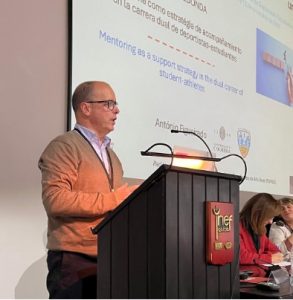
Dr. Antonio Sánchez Pato contributed through scientific coordination, academic leadership and conceptual input, particularly in relation to the design and consolidation of inter-university mentoring networks for high-performance student-athletes. His participation focused on presenting and discussing research-based evidence derived from structured mentoring initiatives, emphasising educational quality, ethical mentoring practices and the holistic development of student-athletes.
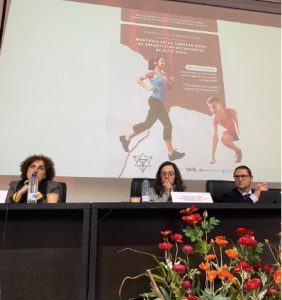
The joint participation of both EAS Board Members ensured strong alignment with the mission and strategic objectives of the EAS, particularly regarding the promotion of evidence-based dual career policies, the advancement of mentoring as a key support mechanism, international academic cooperation and knowledge exchange, and the integration of research, education and sport governance in Europe.
In fact, the symposium contributed to strengthening international research and professional networks, enhancing cooperation between universities and sport organisations, and establishing mentoring as a central component for supporting high-performance student-athletes’ academic success, personal development and long-term career sustainability, fully consistent with the values and priorities of the EAS.
On November 24, 2025, the 19th EAS Cafè was organized to discuss the relevance of soft skills for the employability of athletes at the end of their sport career and to raise the awareness of the educational platform for young athletes (https://SS4DC.eu) now available thank to the collaborative efforts of the ERASMUS+Sport SmartStart4DC consortium (101133555).
Prof. Cristina Cortis (University of Cassino and Lazio Meridionale, Italy) welcomed around 100 participants and moderated the interesting questions addressed at the endo of the speakers’ presentations.
The Cafè was opened by Mrs. Vedrana Malec who illustrated how her outstanding athletic cross-country skiing helped her improving different soft skills, which are extremely useful for her professional careers, followed by Mr. Sebastian Harry Lloy Algie, who highlighted how soft skills helped him as a basketball athlete in different contexts and a student in physiotherapy, and by Mr. Joseph Tanti who shared his experience as an elite handball athlete in countries with different sport cultures and as a coach of youth teams in Malta. These testimonies stimulated a participated discussion on the important role of soft skills, which are usually lacking in formal educational paths.
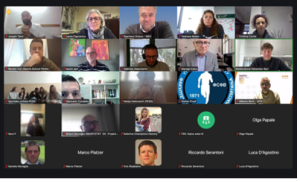
To enhance the student-athlete knowledge, competences, and skills, Mr. Renato Vuk, coordinator of the Smart Start for DC, illustrated the SS4DC platform encompassing educational material organized in 10 modules regarding Communication Skills, Social interaction skills, Emotional Intelligence, Listening skills, Leadership, Team-work and Collaboration, Time Management, Desire for Continuous Learning, Critical Thinking, and Respect for Diversity. Whilst the educational course for athletes encompasses videos, text lessons, reflections, and self-assessment tests for each module, the section dedicated to the educators presents manuals and presentations in several languages (e.g., English, Bulgarian, Croatian, Greek, Italian, and Turkish). Furthermore, the platform offers self-assessments for career guidance in sports, labour market, continuing education, and transferable skills. Finally, Mr. Vuk invited the participants to follow the social media of the SS4DC project.

A special thank to mr. Marco Pinchera who translated the speeches in visual-gestural language for the deaf community.
Soft skills are considered crucial for the employability of athletes at the end of their sport career, and the key aim of the ERASMUS+Sport SmartStart4DC project (101133555; https://SS4DC.eu)
On behalf of the EAS Executive Committee, we inform you that the 19th EAS Virtual Cafè on “XXI century skills as a bridge between sport and employability” will be held on Monday November 24, 2025 (from 13:00 CET) zoom meeting: https://uni-lj-si.zoom.us/j/99306210428
13:10 Welcome – Prof. Cristina Cortis, PhD
Cristina Cortis, PhD, is Rector Delegate for Sport and Health at the University of Cassino and Lazio Meridionale, Italy. Her research interests span from determinants of sport performances to dual career of athletes.
13:10 What Sport Has Taught Me About Succeeding in Business and Life – Mrs. Vedrana Malec
Vedrana Malec, Master’s Degree in Journalism, is a three-time Olympian in cross-country skiing. Currently, a project manager in the sports event industry, and a dual career ambassador of the Croatian Olympic Committee. She believes that dedication, discipline, and teamwork are the foundation of personal growth, professional development, and the achievement of long-term goals.
13:20 Dual Careers in the 21st Century: Building a Successful Path Beyond Sport – Mr. Sebastian Harry Lloy Algie
Sebastian Harry Lloy Algie, Bachelor Degree in Physiotherapy, is a former basketball player born in Canada who moved to Italy with his family and started playing basketball till two years ago.
13:30 Pursuing Excellence in Life through Sports – Mr. Joseph Tanti
Joseph Tanti, Master’s in Science of Sports Coaching, is a teacher of Physical Education, a handball coach, and Sports Promotion teacher in Malta. He spent three years at the Aarhus Sports Academy in Denmark where he coached a women’s handball team.
13:40 Smart start for DC – the Dual Career Journey Starts Here – Mr. Renato Vuk
Renato Vuk, Bachelor Degree in Media Management, is the Head of the Project Management Office at Sports School PESG, where he aims to provide young student-athletes with high access to additional growth opportunities and support in pursuing their dual careers, as through the European SS4DC educational platform.
13:50 General discussions and concluding remarks
Dear friends of Dual Career,
As anticipated during the EAS Conference in Riga last October, we inform you that the 19th EAS Virtual Cafè on “XXI century skills as a bridge between sport and employability” will be held on Monday November 24, 2025 (from 13:00 CET).
We invite you to visit the official website of the ERASMUS-Sport Smart Start 4 DC project (https://SS4DC.eu) where you can explore the Educator Manuals of Communication Skills, Social Interaction, Emotional Intelligence, Listening Skills, Leaderships Skills, Teamwork&Collaboration, Desire for Continuous Learning and Application of Knowledge, Critical Thinking, and Respect for Diversity
In the next days, you can have further information and the link to the Cafè at www.dualcareer.eu.
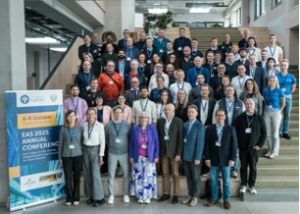 On October 6-8, 2025, the University of Latvia hosted the Annual EAS Conference and General Assembly in Riga, Latvia. Eighty-two delegated from 17 countries attended the event, appreciated the 29 oral presentations reporting dual career programmes, projects, and policies, and enthusiastically participated in three workshops, six activity breaks and two long walks organized to celebrate the 10th Anniversary of the #BeActive Programme.
During the opening ceremony, Prof. Ilvis Abelkalns, President of the Organizing Committee, welcomed the participants, followed by Enno Ence, Vice Rector of University of Latvia, EAS President Laura Capranica, Raimonds Lazdiņš, President of National Olympic committee, and Agita Ābele, President of Latvian Universities Sports Federation.
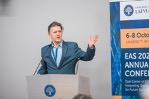
A key lecture on the ERASMUS+ funding opportunities on Dual Careers by Izabela Pelczynska (European Education and Culture Executive Agency – EACEA) was crucial to stimulate the envisioning of further collaborations between the participants. Sara Massini, Secretary General of ENGSO, presented the continuum between grassroot and elite sport and signed a Memorandum of Understanding between EAS and ENGSO.
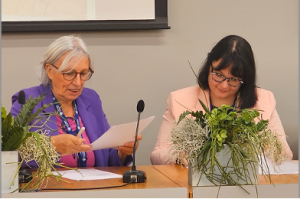
Fernando Parente, FISU Executive Committee member, presented International University Sports Federation (FISU) and Dual Career – a global approach for stakeholders; Edgars Pukinsks, Deputy State Secretary for Sports and Youth Affairs, Ministry of Education and Science Republic of Latvia, addressed the topic Legacy Dual careers – double impact, double responsibility; the session was closed by Joerg Foerster (German University Sport Federation- ADH) who illustrated the Legacy of the FISU World University Games, focusing on the Dual Career of Student-Para-Athletes.
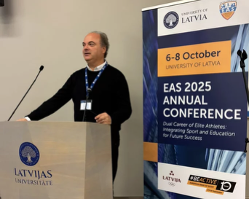
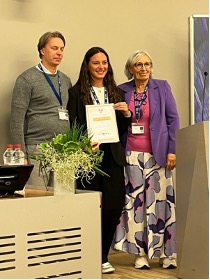
The Bengt Nybelius Scholarship winner Olga Papale from the University of Cassino e del Lazio Meridionale, Italy, presented “Eating Right, Sleeping Tight? The Evaluation of the Student-Athlete Paradox”.
In the afternoon, Felipe Rodrigues da Costa, president of the Brazilian Association of Dual Career presented Challenges and opportunities for implementing and developing a student-athlete support program in the Federal District (Brazil). Then three Working Group Activities addressed the following topics: 1) Dual Career in High School, Transition from High School to University, Dual Career in Universities, and Transition from a Sports Career to Employment.
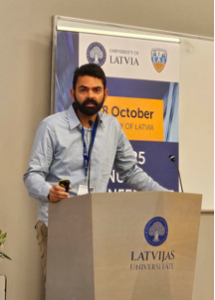
On the second day, the Conference was organized at the Rimi Olympic where Ruta Millere Celmiņa from the Latvian Olympic Committee, presented Elite Level Athletes’ Awareness and Use of Dual-Career Programs in Latvia; Klāvs Olšteins, from the Latvian Basketball Union addressed the topic Basketball – as an opportunity to earn an education; and Jacopo Bouquet from Sport4impact, Italy, illustrated Dual Career from the perspective of SDG17 and PPPs. The following presentations were dedicated to “Focus on the transition from university to the job market: initiative by AU Elitesport” (Anna-Lena Toft Petersen, AU Elitesport, Aarhus University, Denmark), “Updating Dual Career Self-Management in Individualized Mentor-Mentee Collaboration in Sports and Studies” (Agita Ābele, Latvian University Sports Federation), “University mentoring network to facilitate the dual career of athlete-students” (Antonio Sánchez-Pato, Universidad Internacional de La Rioja, Spain), “Sustainability Perceptions Among Young Tennis Players: Insights from the European GreenTennis Project” (María José Maciá Andreu from UCAM Universidad Católica de Murcia, Spain), “Advancing Athlete Employability through Career Mentorship and Education” (Gamze Aydın, Sportstech, Türkiye), and “Improving the support to student athletes with international mobility” (Dorothée Brac de la Perriere, INSA Lyon, France), “Advancing Training and Support for Dual Career Officers Throughout Europe” (Juan Alfonso Garcia Roca, UCAM, Spain), ”Finnish high school student athletes’ perceptions of the implementation of the dual career” (Pertti Huotari, University of Jyväskylä, Finland), “PORTAL Project: Building an Inclusive European Platform for Olympians’ Post-Career Transitions” (Francesca Di Rocco, San Raffaele Open University of Rome, Italy), “ERASMUS Sport Project – FIND ME: University Dual Career Opportunities“ (Nenad Stojiljković, University of Nis, Serbia), “Designing and Evaluating a Stakeholder-Informed Mobile App to Promote Physical Activity in Children: The Walk Around the Earth Erasmus+ Project” (Cristina Cortis, University of Cassino and Lazio Meridionale, Italy), “Elevate DC – Building the Future of Elite Athlete Careers in Latvia” (Owen Southgate, NYSA, Sweden). “Choosing Non Teaching Paths in PETE: An Interpretative Phenomenological Analysis of Dual Career University Footballers” (Rıdvan Çakir, Şırnak University, Turkiye), “Fostering Success in Young Biathletes: Addressing Cultural and Educational Challanges” (Mojca Doupona, University of Ljubljana, Slovenia), “Books, Boxing, Belonging: The Case of Turkish Female Student-Athlete Duo” (Kıvanç Semiz, RTEU, Turkiye), “Perception of barriers in dual careers and the importance given to psychological characteristics in athletes in training: a gender perspective” (Juan Alfonso Garcia Roca, UCAM, Spain), “Winning in life, winning in sport” (Anda Paegle, University of Latvia; “Andara plus”, Latvia), “Supporting High Level Athletes at INSA, France” (Harve Bizzoto, INSA LYON, France), and “Forms of support for the student athletes in the Academy of Physical Education in Katowice” (Rajmund Tomik, Academy of Physical Education in Katowice, Poland).
Pekka Fredriksson, Jani Syrjala, and Ismo Miettinen (Kastelli Upper Secondary Sport School, Oulu, Finland), presented the 2026 EAS Conference to be held in Oulu, Finland, on October 5-7, 2026, whereas Hakan Ege (Collins Innovation, Oslo, Norway) launched the Europe’s Sport Knowledge Hub at https://voicesport.eu.
The Annual General Assembly was directed by the EAS Secretary Ole Keldorf. The members approved the activity report presented by the President Laura Capranica and the financial report presented by the Treasurer Mojca Doupona. The Assembly approved also the Cristina Cortis’ proposal to consider “Sports” as the scientific journal of EAS. Furthermore, the Assembly confirmed Flavia Guidotti, Alejandro Alejandro Leiva-Arcas, and Malene Knudsen as Members of the Next Generation EAS Committee, which will be responsible to assign the 2026 Bengt Nybelius Award and to collaborate to the enhancement of the communication channels of the Network.
During the Conference, the participants had also the opportunity to visit the University of Latvia, the Rimi Olympic Center infrastructure and facilities, the Olympic Museum, the beautiful Riga architectures, and to attend the Gala Dinner.
From October 6 to 8, the 22nd Annual International Conference “European Athletes as Students” (EAS) will take place at the University of Latvia in Riga, Latvia.
This year’s main theme, “Dual Careers of Elite Athletes: Integrating Sport and Education for Future Success,” focuses on how educational systems and sports organizations can collaborate to ensure a sustainable future for athletes.
The EAS Conference has become an important annual platform for the exchange of knowledge and experience among representatives of sports federations, universities, and sports schools, ERASMUS+ project partners, and dual career experts. The event features presentations of scientific research, examples of best practices, and opportunities for developing cooperation in future projects. Traditionally, the conference also includes the presentation of the Bengt Nibelius Scholarship, awarded to outstanding young researchers in the field of dual careers.
This year’s conference will gather around 70 participants from 16 European countries and Brazil—including professors, researchers, representatives of national Olympic committees, sports schools and academies, as well as students. Among the participants will also be representatives from the European Parliament, the Latvian Ministry of Education and Science, the Latvian Olympic Committee, the Latvian Basketball Association, and international organizations such as FISU and ENGSO.
Conference participants will explore innovative strategies and policy frameworks that support the academic and athletic development of young athletes. The program will also include practical examples from leading European universities (in Spain, Italy, and Germany), youth sports schools (in Denmark and Finland), as well as experiences from Brazil. Discussions and working groups will serve as a platform for developing new ideas and projects in the field of dual careers.
Professor Ilvis Abelkalns of the University of Latvia emphasizes:
“For the University of Latvia, this is an excellent opportunity to demonstrate its commitment to supporting student-athletes’ education, while also learning from practices implemented elsewhere in Europe. It is also a chance to contribute actively to the work of EAS—for example, the ERASMUS project ‘More than Gold’ initiated by the University of Latvia in 2021 developed guidelines for governments and universities that formed the basis for including dual career provisions in the new edition of the Latvian Sports Law.”
The open and friendly atmosphere of EAS conferences has always encouraged the creation of new initiatives, strengthened cooperation, and fostered the development of lasting professional relationships.
The official conference page: https://eas2025.lu.lv/
On September 22, 2025, the 18th EAS Cafè was organized to celebrate the 10th anniversary of the #BeActive programme and the 2025 European Week of Sport (EWoS).
In welcoming more than 60 participants from European countries and Brazil with different backgrounds, encompassing students, academics, and sports professionals, Prof. Mojca Doupona (University of Ljubljana, Slovenia, and EAS Treasurer) highlighted the very special milestone of the 10 year anniversary of EWoS as a driving force in helping millions of Europeans becoming active and discovering the countless benefits of a lifelong approach to sport to boost health and mental wellbeing, reduce stress, and bring people together across generations. She also addressed the significant role of the media and different campaigns in raising awareness of the society on growing economic and social impacts of sport, as well as to create positive change. In this respect, EAS has a relevant role for the dual career community.
President mr. Massimiliano Monnanni, and Project Manager mr. Francesco Titotto presented the public body Asilo Savoia and its Talent & Tenacity program, which was finalist in two editions of the #BeActive Award for managing sport programs in confiscated facilities of organized criminal organization, transforming urban peripheries into place of growth in partnership with local institutions. Through sport, Asilo Savoia built an ecosystem with long-term impacts to support youth, women, older, and disabled individuals. In the last 10 years, the Talento & Tenacia (Talent & Tenacity) program aimed to fight school dropout among young athletes in peripheral areas of Rome by offering individualized education plans, scholarships, vocational training, voluntary work, and community involvement. This project gives athletes opportunities to succeed in life independently from their sports career, and revitalized entire peripheral areas of Rome by creating safe and vibrant spaces where young people and the entire community could grow through a real social and urban regeneration that values education, legality and mutual growth. By investing in individual growth and personal development, also remarkable sports results were achieved, with the Montespaccato football team, a club also confiscated from organized crime, has been awarded several Fair Play prizes and achieved the Serie D championship, which is the entry point for the professional path. Finally, many former athletes have transitioned into roles within the sports sector, turning their athletic journey into a professional pathway for a strong and sustainable community for the future.
Dr. Duarte Lopes, Chief of Staff, Secretary of Sport of Portugal, organized two annual conferences of EAS and his involvement in dual career contributed to his personal growth as well as to that of the dual career community. He reminded that the celebration of the anniversary of the European Week of Sport is linked to the European values of inclusion, health and wellbeing, where dual career is part of the legacy of the European Union and the European Community. Dr. Lopes illustrated how Portugal is trying to increase the dual career programs in different ways. Since 2009, several legal papers supporting dual career programs have provided a legal framework for high performance athletes in different conditions. In 2019, the universities were required to create their specific dual career statute to support student-athletes, also in cooperation with the Olympic Committee and the national sport federations. In 2009, a national dual career program in schools was initiated, which has expanded last year through a pilot phase for higher education institutions to guarantee university students a support also at the national level hopefully in the next academic year. Dr. Lopes provided also some good examples in place in Portugal. In cooperation with the National Athletes Commission in the Olympic Committee, dual career measures and opportunities are published and explained in detail in their newsletters to help the student-athletes deciding their best pathway. Furthermore, some national sport federations, like football, golf, and Olympic handball, issue a certification to clubs based on the quality support they provide to young athletes, encompassing also the monitoring of academic achievements, and the organization of meetings with schools and universities. This certification is required when clubs wish to apply for financial support from municipalities. A step forward will be the inclusion in the sport clubs or sport federations of a sport tutor, which is already recognized by the professional qualification system in Portugal. These synergies between the central government, academic institutions, national federations, and municipalities create an ecosystem to support dual career programs. Dr. Duarte concluded with two quotes, one from a former National Olympic Committee President who said: “Sport is a public good that worths to society more than it costs” and his personal one: “Debates about dual career might lose their relevance in the next 10 years if dual career programs will be secured in all nations and all sports for all and each athlete in Europe”.
Dr. Francesca Salvia, a former water polo athlete and mother of two elite fencers and an international pentathlon referee, presented the EduChampDC project, which aimed to bridge the gap between education, sport and society. Envisioned by master’s student in sport management at the University of Rome Foro Italico, EduChampDC was launched at the end of 2024 to raise the awareness on dual career of policy makers, teachers, coaches, and student-athletes, and proceeded with 7 workshops organized in two high schools of Rome, with a further event organized today to celebrate the European Week of Sport through a refreshment course for high school teachers and principals. During the EduChampDC activities and the refreshment course, the advancement of dual career in Italian schools and universities was presented, useful outputs of ERASMUS+Sport projects for teachers (Starting11, Talent, and DC Mentor), parents (EMPATIA), athletes (Springboard, ELCAMP, and Smart Start 4 DC), and university orienteering (Find Me) have been illustrated, whereas the experiences and suggestions of 11 elite student-athletes as ambassadors provided useful information to the 293 participants, and to the 40 policy makers. The positive feedback from the open and direct dialogue between the students, parents, teachers, coaches, and policy makers allowed to envisage a further development of the EduChampDC at Italian level as well as the application to an ERASMUS+Sport Collaborative Partnership, which received a positive evaluation.
A special thank to mr. Marco Pinchera and mr. Pierpaolo Calandri who translated the speeches in visual-gestural language for the deaf community.
The 18th EAS cafè also informed on the upcoming 2025 EAS Annual Conference to be held on October 6-8, 2025 in Riga, Latvia (https://eas2025.lu.lv) where updates in dual career initiatives in Europe will be presented.
REG. NUMBER: Voluntary Organisation registration VO/1270
PIC NUMBER: 913459865
Email: info@dualcareer.eu