
Our Blog
On November 24, 2025, the 19th EAS Cafè was organized to discuss the relevance of soft skills for the employability of athletes at the end of their sport career and to raise the awareness of the educational platform for young athletes (https://SS4DC.eu) now available thank to the collaborative efforts of the ERASMUS+Sport SmartStart4DC consortium (101133555).
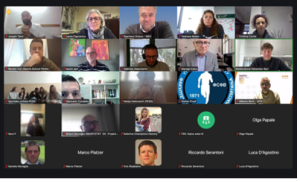
Prof. Cristina Cortis (University of Cassino and Lazio Meridionale, Italy) welcomed around 100 participants and moderated the interesting questions addressed at the endo of the speakers’ presentations.
The Cafè was opened by Mrs. Vedrana Malec who illustrated how her outstanding athletic cross-country skiing helped her improving different soft skills, which are extremely useful for her professional careers, followed by Mr. Sebastian Harry Lloy Algie, who highlighted how soft skills helped him as a basketball athlete in different contexts and a student in physiotherapy, and by Mr. Joseph Tanti who shared his experience as an elite handball athlete in countries with different sport cultures and as a coach of youth teams in Malta. These testimonies stimulated a participated discussion on the important role of soft skills, which are usually lacking in formal educational paths.
To enhance the student-athlete knowledge, competences, and skills, Mr. Renato Vuk, coordinator of the Smart Start for DC, illustrated the SS4DC platform encompassing educational material organized in 10 modules regarding Communication Skills, Social interaction skills, Emotional Intelligence, Listening skills, Leadership, Team-work and Collaboration, Time Management, Desire for Continuous Learning, Critical Thinking, and Respect for Diversity. Whilst the educational course for athletes encompasses videos, text lessons, reflections, and self-assessment tests for each module, the section dedicated to the educators presents manuals and presentations in several languages (e.g., English, Bulgarian, Croatian, Greek, Italian, and Turkish). Furthermore, the platform offers self-assessments for career guidance in sports, labour market, continuing education, and transferable skills. Finally, Mr. Vuk invited the participants to follow the social media of the SS4DC project.

A special thank to mr. Marco Pinchera who translated the speeches in visual-gestural language for the deaf community.
REG. NUMBER: Voluntary Organisation registration VO/1270
PIC NUMBER: 913459865
Email: info@dualcareer.eu