
NEWS
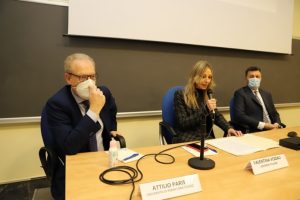
On 24 and 25 March, 2022, UNISPORT ITALIA (the network of 53 Italian universities) organized the First National Conference on Dual Career at the University of Rome “Foro Italico”. The event aimed to stimulate reflections on the profound cultural change that is taking place in Italy in the relationship between academia and sport, to highlight projects and good practices in place, and to outline future actions for an enhanced synergies between these two sectors in relation to services, research, innovation, and contribution to communities and territories.
During the first day, the President of UNISPORT ITALIA, Paolo Bouquet (University of Trento) and the Rector University of Rome Foro Italico, Attilio Parisi, welcomed the participants and the distinguished lecturers. The event was opened by the Undersecretary of State for Sport and Olympic medalist Valentina Vezzali, who commended the networking activities and the fruitful exchange of good practices of UNISPORT ITALIA. She also anticipated the Governmental support for improving Dual Career at academic level including the allocation of funds for scholarships to athletes as students. Luca Pancalli, President of the Italian Paralympic Committee (CIP) claimed that a country not investing in education has no future, being the cultural growth a real social elevator and an assurance for social inclusion. Monsignor Melchor Sanchez de Toca, Undersecretary of the Pontifical Council for Culture, affirmed that sport and education must be integrated for the holistic development of the individual. Giovanni Malagò, President of the Italian Olympic Committee (CONI), and Pompeo Leone, Secretary General of the Italian association of University Sport (CUSI) underlined the relevant efforts of UNISPORT ITALIA, CONI, and CUSI in developing national Dual Career guidelines to allow an effective complementarity of sports and academic careers. Salvatore Cuzzocrea, Vice President of the Italian Conference of University Rectors (CRUI), recognized the sports values of equality, collaboration, attention, and respect of rules crucial to educate future generations of citizens. Vito Cozzoli, President of Sport & Health, Andrea Abodi President of the the Italian bank for the sustainable development of sports and culture (Istituto di Credito Sportivo) envisioned future collaboration with UNISPORT ITALIA for the promotion of the educational value of sport and possible development of sports facilities at university level, respectively.
Maurizio Marano (University of Bologna), presented the findings of the survey promoted by UNISPORT ITALIA on Dual Career at Italian Universities and the online platform developed to help athletes get acquainted with the different Dual Career paths offered at academic level (https://www.unisport-italia.it/dual-career/). Kairis Ulp, Policy Officer of the European Commission, illustrated the European dimension of the Dual Career of athletes and the opportunities of the 2021-2024 workplan for sport. Mojca Doupona, Slovenian Director General for Sport and EAS Treasurer, described the actions carried out during the Past Slovenian Presidency of the European Union and the follow-up peer learning activities in Dual Career planned for September 2022. Paolo Pizzo (CONI) explained the efforts and objectives of the CONI-UNISPORT ITALIA-CUSI working group in developing the national guidelines for Dual Career. The EAS President, Laura Capranica, pointed out the achievements, challenges, and future directions of the developmental process in Dual Career fostered by the ERASMUS+Sport Collaborative Partnerships. Pompeo Leone (CUSI) reported on the research carried out by CUSI on Dual Career programmes at higher academic institutions and distributed the report book to the participants (also available at http://cusi.it/wp-content/uploads/ALLEGATIPDF/The_dual_career_of_student_athletes_in_italian_universities_cc.pdf). Finally, Dr. Elisabetta Nones (University of Trento and member of the Board of the European network on sports services in universities – ENAS) introduced the aims of the European Network of Academic Sports Services (ENAS).
On March 25, Dual Career programmes and projects at the University of Verona, Polytechnic of Turin, University of Padua, University for Foreigners of Siena, Luiss Guido Carli University, Catholic University of the Sacred Heart (UCSC), University of Molise, University of Cassino and Southern Lazio, University of Naples “Federico II, University of Modena and Reggio Emilia, University of Trento, Link Campus University, Sapienza University of Rome and Campus Bio-Medico University, University of Calabria, University of Siena have been presented and the financial opportunities provided by the Credito Sportivo have been described. After the Conference, the General Assembly of UNISPORT Italia elected the eight Members of 2022-2025 Board (Marco Barla, Politecnico di Torino; Paolo Bouquet, Università di Trento; Laura Capranica, Università di Roma “Foro Italico”; Cristina Cortis, Università di Cassino e del Lazio Meridionale; Marco Gesi, Università di Pisa; Caterina Gozzoli, Università Cattolica del Sacro Cuore; Luigi Melica, Università del Salento; Antonio Paoli, Università di Padova), who will designate the new President in the next days. The Board will also include a Member Designated by CRUI.
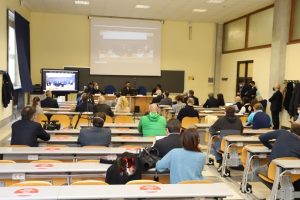
Hrvatski olimpijski odbor – Naslovna (hoo.hr)
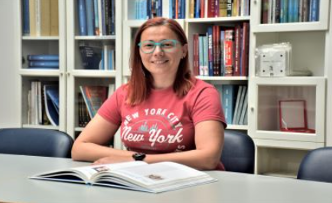
Zagreb, Croatia March 29, 2022 – Very well-known Croatian Olympian Snježana Pejčić (39) has been hired as the head of the newly established Career Centre for Athletes, which will work at the Croatian Olympic Committee. She is the first Olympic medallist (bronze) for Croatia at the 2008 Beijing Olympics, as well as the first Olympic medallist in archery in individual competition for women. After the Tokyo Olympics, she decided to end her active sports career and turn a new page in her life with an academic degree. Since 2019, she has been working in a dual career: as a DC ambassador in the Sinergy project for sports culture, Olympic values and dual careers in sport and as a member of the Commission for Dual Careers in Sport and Athletes Commission in the Croatian Olympic Committee. As an athlete and student, ambassador and member of the Commissions, she has a lot of experience in helping active, former and future athletes who need assistance with dual careers. She said she “hopes to be as successful in this position as she was in her sports career.”
During the last year, EAS supported the President of the Croatian Commission for Dual Careers in Sport, Prof. Romana Caput-Jogunica, in her efforts to finalize the whole process related to the Centre.
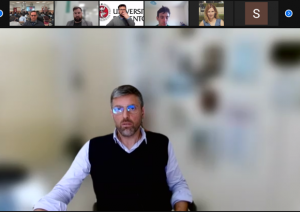
On March 24 the sixth virtual EAS cafè focused on the good practices and opportunities for dual career service providers. Antonino Bianco, Professor of Sports Sciences and Deputy Dean for International Relations at the University of Palermo moderated the event offering good practices at the Catholic University of Murcia (UCAM), Spain, and future educational opportunities for dual career service providers through the ERASMUS+Sport Collaborative Partnership STARTING11 platform.
The outstanding dual career approach at UCAM was illustrated by Prof. Antonio Sanchez-Pato and Prof. Alejandro Leiva-Arcas, Dean and Deputy Director of the Faculty of Sport at UCAM, respectively. Since 2011, UCAM established a solid dual career service for 425 Spanish athletes as students (males 55%, females 45%) competing in 35 different sports disciplines and cooperated in more than ten ERASMUS+Sport Collaborative Partnerships in dual career. In particular, during the last two Summer Olympic and Paralympic Games, UCAM Student-athletes won 24 (Rio 2016: 15 Olympic, 9 Paralympic) and 27 (Tokyo 2020: 20 Olympic, 7 Paralympic) medals. The dual career programme at UCAM is based on four pillars: Recruitment, Administrative assistance, Academic support, and Research development. Recruitment provides 90% full scholarships and 10% discount fees (range 20-50%), including a possibility to extend the scholarship to family members in case of relocation. Whilst the administrative assistance is managed by an academic manager helping with administrative issues and financial support, the academic support involves both professors and students with mentoring and study buddy roles, respectively. Through Research, UCAM approaches dual career as an ongoing laboratory and establishes cooperation with several academic institutions and sport bodies. In fact, in 2015 UCAM published the handbook “An Innovative European Sports Tutorship Model of the Dual Career of Student-Athletes” (https://erasmus-plus.ec.europa.eu/projects/eplus-project-details#project/603346-EPP-1-2018-1-LV-SPO-SCP), in 2021 a special issue on Dual Career of the peer-review journal of UCAM “Cultura, Ciencia y Deporte” encompassing 11 international scientific contributions (https://ccd.ucam.edu/index.php/revista/issue/view/87), and in 2022 the Guidelines to Promote the Dual Career of Athletes-Students (Methodology for Universities and Manual for Authorities) within the More Than Gold ERASMUS+Sport Collaborative Partnership (https://erasmus-plus.ec.europa.eu/projects/eplus-project-details#project/603346-EPP-1-2018-1-LV-SPO-SCP). Finally, UCAM will host in Cartagena, Spain, the 2022 EAS Annual Conference and General Assembly next September 28-30.
Dennis van Vlaanderen and Wolfgang Stockinger Manager of Elite Sport & Education at the Amsterdam University of Applied Science and CEO of TW1N illustrated the educational platform for dual career service providers developed within the ERASMUS+Sport Collaborative Partnership STARTING11 to facilitate the implementation and professionalize dual career practice at sport, education and the labour market levels. In having in mind the needs of the dual career practitioner and supporter, the ready-made and fully customizable digital tools pertains three main service areas: Manage, Train, and Counsel. In particular, the manage area helps building the political, theoretical and infrastructural know-how to implement and administrate dual career services as well as to efficiently communicate towards the most relevant dual career stakeholders. The train aims to prepare, sensitize and empower athletes by providing them with knowledge, inspiration and skills to successfully pursue their dual careers. The Counsel area intends to professionalize interpersonal counselling services to foster the coping, decision-making and planning capability of athletes during career transitions. At the end of their presentation, Dennis van Vlaanderen and Wolfgang Stockinger invited the participants to attend the STARTING 11 Final Conference at the Amsterdam Olympic Stadium next May 12, 2022. The Event will allow to explore the European Dual Career Toolkit first-hand, to attend presentations and workshops of international dual career experts and high-performance athletes, and to network with like-minded professionals from across Europe. The link for further information and registration ihttps://starting11.eu/conference/.
After the general discussion, Prof. Bianco complimented with the speakers and especially appreciated the outputs of their Collaborative Partnerships, which provide useful material freely accessible online for the benefit of dual career service providers.
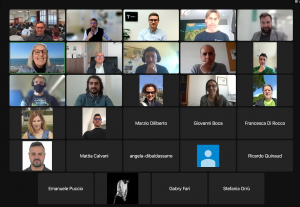

As a Member of the Consultative Committee Bureau of the Enlarged Partial Agreement on Sport (EPAS) of the Council of Europe, on February 21-22, 2022, EAS participated to the webinar on ‘Physical education and school sports: a creative approach to human rights and democracy’ and the Consultative Committee Bureau meetings.
In addressing how physical education teachers and coaches can implement a values-based physical education and sports training approach, on February 21 the webinar expanded the relevant issue of sports at school levels, also discussed during the last fifth EAS cafè.

The webinar was opened by Kolë Gjeloshaj (Chair of the EPAS Consultative Committee and Deputy Secretary General of International School Sport Federation), with Sophie Kwasny (Head of the Sport Division of the Council of Europe) welcoming the panelists and the participants, and Francine Raveney (Deputy Executive Secretary of EPAS) moderating the speakers, who shared their experiences and expertise on creative approaches to physical education and school sports.
In particular, Michael Trinker (Senior Project Manager at the Council of Europe) illustrated the European Sports Charter, which was revised in 2021 to inspire Member States policies on a comprehensive framework of an ethical, inclusive and safe sport; Hrvoje Custonja (Secretary General of the International School Sport Federation) presented an international perspective of the opportunities and challenges of school sport; Ana Znidarec (Assistant professor at the University of Zagreb) reported relevant concepts for the promotion of values through physical education and sport; Caterina Pesce (Associate professor at the University of Rome Foro Italico) explained the relevance of translating scientific principles to multisectoral active play promotions for a holistic child development; Rose-Marie Repond (European Physical Education Association) testified the sports values and principles of the Council of Europe; and Elena Casero (Project officer at the Council of Europe) offered the project Start to Talk as a good practice example to combat abuse and harassment in sport. More information is available at https://www.coe.int/en/web/sport/webinar-physical-education-and-school-sports-a-creative-approach-to-human-rights-and-democracy-

To allow for an effective integration of newly elected members within the Consultative Committee (Alice Milliat Foundation, International Basketball Federation – FIBA, International Federation for Sports Officials – IFSO, and Panathlon International – PI), an induction session was organized in the morning of February 22 for providing information on the Council of Europe, the role of the Consultative Committee and its members, and the EPAS’ structure and activities. The induction session also allowed the new members to present their aims, vision, and activities, which could fulfill their active in EPAS.
In the afternoon, a meeting of the Consultative Committee Bureau was organized to report on the recent EPAS activities (e.g., webinars and projects), and to define the provisional agenda of the plenary meeting to be held on June 13, 2022 in Strasbourg, France, during which the elections to the Consultative Committee Bureau will take place. In particular, according to the EPAS Term of Reference, after the two last mandates EAS will not be eligible for the next two-year term.
Further information on the calendar activities of EPAS are available at https://www.coe.int/en/web/sport/calendar-of-activities-2022
Dear EAS Members,
the Executive Committee invites the Member Institutions to nominate candidates for the upcoming Executive Committee and President elections at the General Assembly of EAS in Cartagena/ Spain (September 28-30, 2022).
As anticipated in the General Assembly 2021 in Lisbon, Portugal, at the 2022 General Assembly we will elect the Members of the Board and President elections for the 2022 – 2026 term.
Requirements for nomination
Current members of EAS in full standing are entitled to nominate candidates
How to nominate
Nomination of candidates for election to the Board have to be deposited with the EAS Secretary General Mr. Ole keldorf in writing (email: ok@esaa.dk) by any two institutional members of EAS, who must be eligible to vote at the Annual General Meeting. EAS nomination form can be downloaded here and the required information include:
- Name – Position of nomination– Address – Date of birth – Occupation of the Candidate.
- ID number, names and signatures from 2 proposers.
Deadline for nomination is 23:59 Central Standard Time on March 18, 2022. The Secretary General will enter the names in the Register of Candidates for the election to be held during the 2022 General Assembly.
If there is any question, do not hesitate to send an email to the EC members. Contact data can be found here: http://www.dualcareer.eu/about-eas/
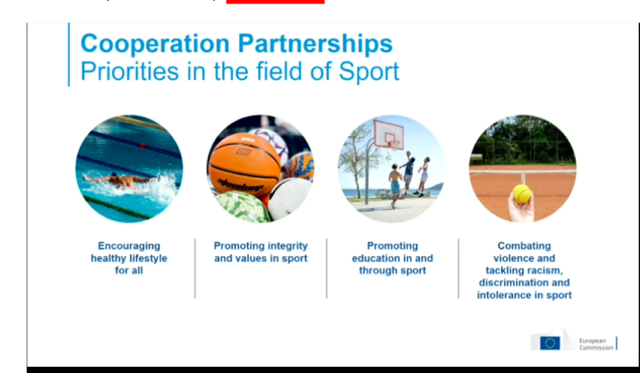
For the second year, the European Commission and the Education, Audiovisual and Culture Executive Agency (EACEA) organised online the info day of the Erasmus+ Sport funding opportunities for sports organizations, educational institutions and agencies on the 2021 to 2027 priorities: Encouraging healthy lifestyle for all; Promoting integrity and values in sport; Promoting education in and through sport; and Combatting violence and tackling racism, discrimination and intolerance in sport.
On January 31, Ms Mariya Gabriel, European Commissioner for Innovation, Research, Culture, Education and Youth and Mr Tomasz Frankowski, Member of the European Parliament opened the event, Mr Yves Le Lostecque, EACEA Head of Erasmus Mundus & Sport Unit, and Ms Gaël Broze, EACEA Head of Sport Sector illustrated the objectives and structure of Erasmus+ Sport, Ms Florencia van Houdt, Head of Sport Unit of DG EAC, European Commission moderated a round table on program priorities.
On February 1, 2022, Mr Luciano Di Fonzo, Deputy Head of Erasmus Mundus & Sport Unit, EACEA moderated technical sessions on application and submission procedures, and funding mechanisms, illustrating in detail the expected work-package structure of proposals, the most frequent mistakes, and the evaluation process.
The streaming of the event is available at: https://www.eacea-events.eu/erasmusplussportinfoday2022/
According to the “Motion for a European Parliament Resolution on EU Sports Policy: Assessment and Possible Ways Forward”, Collaborative Partnerships could have opportunities to implement the EU Guidelines on Dual Career of athletes and to extend them to all sport staff engaged in structured sport.
Therefore, EAS invites its Members to develop proposals for supporting athletes and sport staff in combining their sport careers with education and jobs. In considering its consolidated experience in EU-funded projects, EAS will be happy to cooperate in innovative proposals and to help applicants establish fruitful consortia.
In particular, the deadlines for funding opportunities are:
Small-scale partnerships in the field of sport: 23 March
Cooperation partnerships in the field of sport: 23 March
Not-for-profit European Sport Events: 23 March
Capacity building in the field of Sport: 7 April
The second transnational meeting of the European Para-Limits project (https://paralimits.eu) was held at the Foro Italico University in Rome on December 16, 2021. During the meeting, the progress of the collection of the eminence-base knowledge collected through an international survey was presented and further activities were envisioned. The partners also agreed on the deadlines for the next tasks and on the steps to present the findings. In particular, it was envisioned to disseminate the project and the outcomes of its activities at the 2022 Annual EAS Conference to be held at the Catholic University of Murcia (UCAM) in Cartagena, Spain. On 30-31 May and 1 June, 2022, the next transnational meeting will be held at the University of Limerick, Ireland. Despite the challenges of the COVID-19 pandemic, during the first months of the project the partners recognized their enthusiastic commitment in accomplishing the preliminary phases of Para-Limits and they were very satisfied by the great work carried out.
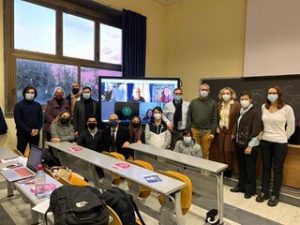
On December 10, 2021, the fifth virtual EAS cafè addressed the support of dual career high school athletes especially during the critical pandemic situation. Masar Gjaka, winner of the 2018 Bengt Nybelius award and currently Dean of the Faculty of Sport and Movement Science, UBT College, Pristina, Kosovo, moderated the event, which offered Italian, Slovenian, and Danish approaches and experiences, as well as an opportunity to envisage future actions and visions in dual career of talented athletes.
Paola Deiana, Director of the Office V, Italian Ministry of Education, presented the development of the experimental dual career high school programme, which was introduced in 2015 and currently involves more than 1500 schools, 5000 tutors, and 14000 athletes meeting the requirements established by the Italian Olympic Committee, Italian Paralympic Committee and the Italian Sports Federations. Despite its positive trend, this programme involves a lower number of female athletes with respect to male athletes and a low percentage of Paralympic athletes with respect to their Olympic counterparts. Paola Deiana anticipated that the Italian Ministry of Education is envisaging an extension of the programme to all the Italian schools, from the primary schools to the universities, and an equity for gender and capabilities. Furthermore, she highlighted the need of an innovative educational approach, which should be effective in providing knowledge with a reduced live-teaching time and encompassing sports issues in the different topics of high school curricula.
Jožef Križaj, Assistant Professor and Head of the Postgraduate Doctoral Studies Department at the Faculty of Sport University of Ljubljana, Slovenia, gave a contribution as a researcher and as a parent supporting the dual career of elite youth athletes. He illustrated the dual career programme at the Slovenian high schools and presented some challenges youth athletes faced during the COVID-19 lockdown. In particular, he disclosed the results of a national research, which highlighted differences between athletes of individual and team sports, the latter suffering more the negative effects of lockdown for missing group training sessions and weekly competitions. Jožef Križaj urged particular attention to adolescent athletes to prevent pandemic-related sport dropouts and to sustain a proper development of sport skills during the post-pandemic time. This concern is especially evident after the past two years and can heavily affect the sports system in a near future.
Ole Keldorf, Head of Sport at the prestigious Elite Sports Academy of Aarhus (ESAA), Denmark, and member of the EAS Executive Board, gave a precious contribution to the debate in presenting the pandemic-related critical aspects observed in Danish youth athletes. Data from the ESAA observatory suggest that dual career actors should place particular attention to the talented youth athletes’ perception and attitudes towards sports, life, and wellbeing. He claimed that the European dual career culture should consider particularly relevant the mental health of youth athletes and offered the ESAA survey as a valuable example of dual career best practice for monitoring the wellbeing of athletes as students. In fact, the systematic collection of athletes’ perceptions regarding their sports enjoyment, recovery, and social aspects could be crucial not only to prevent sport disengagement and dropouts but also to foreseeing new avenues for sport development. Ole Keldorf also called for a cooperation between countries to share possible solutions to the challenges posed by this pandemic situation.
In considering the call for the Next Decade of European Education through a cooperation between educational institutions in different countries (https://ec.europa.eu/education/summit/next-decade-european-education_en ), members of the EAS community were invited to be proactive in establishing innovative collaborative partnerships in dual career for high school athletes.
The fifth EAS Virtual Cafè attracted around 60 European dual career experts and will come back on February 2022.

On December 2, 2021, the Associació Esportiva Carles Vallbona (AECV, coordinator) hosted the final event of the European Collaborative Partnership “Dual Career for Women Athletes” (DONA), which aimed to support dual career of talented female athletes in cooperation with Phoenix Sport Club (PSC), Scuola di Pallavolo Anderlini Soc. Coop. Sociale SD (SPA), Istres Provence Volley (IPV), De SportMaatschappij Foundation (DSM), University of Ljubljana (UL), and the European Athlete as Student (EAS) network (EAS). Despite the COVID-19 pandemic, DONA succeeded in offering a pilot programme on female athletes’ Dual Career competences (i.e., monitoring and evaluation toolkit) at the level of volleyball clubs.
Joan Carles Marín, project coordinator, opened the face-to-face conference and welcomed 200 participants.
Leonard Zammit (Phoenix Sport Club) illustrated the aims, development, and outcomes of the project. In particular, she stressed the DONA methodology for successfully approaching and enhancing female athletes’ Dual Careers, which encompassed quantitative and qualitative analyses.
Federica Stradi (Scuola di Pallavolo Anderlini Soc. Coop. Sociale SD) presented five steps for implementing Dual Career at a volleyball club level, encompassing Coordinator and Dual Career Club Management Team, Philosophy, Communication, Implementation and Monitoring. In considering that the COVID pandemic affected the time management, goal setting and identity of athletes, Noemí Bonet (psychologist of AECV) and Joan Carles Marín (President of AECV) presented the impact of the DONA project and offered ideas for the future.
Moderated by TV3 journalist Jordi Sanuy, Ona Carbonell (synchronized swimming Olympic medalist), Aina Berbel (international player at CV Sant Cugat), Maribel Zamora (President of the Catalan Volleyball Federation), Anna González (mother of a volleyball player) and Gloria Montoy (education inspector) discussed in round table Dual Career of female athletes.


The Italian Olympic Committee hosted the final event of the Sport Opens School
On November 23, 2021, the Italian Olympic Committee hosted in the prestigious Sala d’Onore of Foro Italico the final event of the European Collaborative partnership Sports Opens School (SOS). Due to COVID-19 restriction, the event was organized in a blended modality with around 70 participants face-to-face and more than 100 booked for the online modality.
During its lifetime, the eight partners of SOS (Centro Universitario Sportivo, CUS Padova – ITA,
Comitato Olimpico Nazionale Italiano, CONI – ITA, Inspectoratul Școlar Județean Bacău – ROM, Instituto N.ª Sra. da Encarnação – Cooperativa de Ensino, ECB – POR, Istituto di Istruzione Superiore ‘Newton-Pertini’ – ITA, Budapest VI. Kerületi Kölcsey Ferenc Gimnázium, KFG – HUN, and the European Athlete as Student Network – MLT) cooperated to develop a new teaching method for high school physical education teachers.
Dr. Marco Arpino and Dr. Jacopo Tognon (CONI) opened the conference and Mr. Riccardo Garavello (CUS Padova) welcomed the participants of CUS Padova. Dr. Paola Deiana (Office V, Italian Ministry of Education) stressed the relevant role of physical education for the holistic development of young students and supported new approaches of school physical education to enhance active lifestyles and the sport culture.
Marianna Pavan (CUS Padova), Laura Capranica (EAS), Laura Brazzarola (CUS Padova), and André Luís (ECB) illustrated the project’s aims, development, and outcomes. In particular, the initial phase of SOS encompassed research updates on three main areas Physical Activity and Health; Fairplay and Integrity; Life and Employability Skills. Furthermore, school coordinators provided an overview of the specific situation of each partner school. This narrative research allowed to create the 15 SOS Physical Education teaching sheets and teaching units, translated in English, Hungarian, Italian, Portuguese, and Romanian. Following the analysis of data collected during a monitoring phase, the SOS toolkit is now available to be used at high school levels as a part of the traditional PE curriculum (https://www.sportopensschool.eu).
Finally, Antoni Balàsz (KFG) offered the opinions of the students participating in the project and Marta Gravina (CUS Padova) presented the closing remarks.
REG. NUMBER: Voluntary Organisation registration VO/1270
PIC NUMBER: 913459865
Email: info@dualcareer.eu