
EU Projects
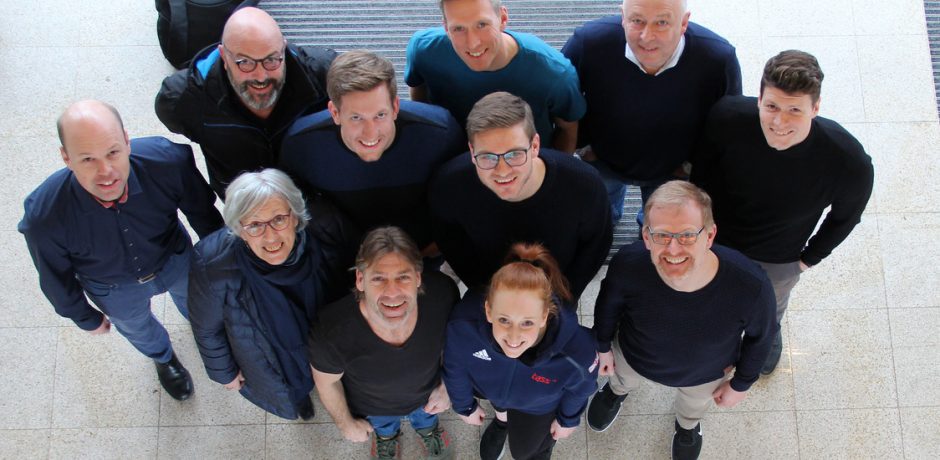
Luxembourg has been in the international media in the last few days mainly because of the switch to a free “public transport for everyone”. During the breaks of the three-day meeting of the ERASMUS + funded project STARTING 11, this sustainable decision was always an issue.
The main topic, however, was the further development and specification of the instruments for improving the situation of the dual career in the countries of the European Union.
In several workshops and small groups, the representatives of the seven partner institutions worked, among other things, in the areas of “advice in dual careers”, “framework conditions of dual careers” or “management of dual careers”.
It was exciting to see that the project partners, including the Talented Athlete Scholarship Scheme (TASS) from England, met for the first time after Brexit, which will have no direct impact on the project. Because of a favorable transitional arrangement for the ERASMUS + program, it is possible that the very active partner from Great Britain can work as a full member until the end of the project.
That project unites leading European institutions in dual career research and practice, to create the very first European Dual Career Toolkit. The lead is taken by the Amsterdam University of Applied Science, Partners are:
– Athletes as Students Network (EAS – Malta)
– Creps Toulouse (CREPS – France)
– German University Sport Federation (adh – Germany)
– Sportlycee Luxembourg (SplL – Luxembourg)
– Talented Athlete Scholarship Scheme (TASS – England)
Aim of the project is to develop tailored tools to the specific demand of dual career service providers in the EU member states. Using an integrated approach, STARTING 11 empowers key actors in sport, education and the labour market to provide high quality services to athletes in all stages of their sporting career, reaching from school level to the stage of retirement from sport.
EAS is represented in that project by Prof. Laura Capranica (Foro Italico) and Ole Keldorf (Eliteidraet Scole Aarhus – ESAA).

Call for papers: December 19, 2019. – Deadline: March 1, 2020. Publication: September or December 2020. – Editors: Antonio Sanchez Pato, Miquel Torregrosa and Elena Conde
Researchers have demonstrated the problems in the lives of elite athletes, who dedicate most of their time to training and competitions and have great difficulties in developing their academic career (Brackenridge, 2004; Conzelmann & Nagel, 2003). The adequate reconciliation of the sports career and academic life, allows the athlete to prepare an alternative working life outside the sports world as the withdrawal time approaches (Puig & Vilanova, 2006; Torregrosa et al., 2015; Wylleman et al., 2004).
The sporting withdrawal, as a common and inevitable moment for all elite athletes, occurs at an early age, when the person still has a large part of his life ahead of him, and the absence of a complementary training to the sport, prevents the use of capital sports obtained throughout his career (Puig and Vilanova, 2006).
The concept of dual career (CD) refers to the challenge of reconciling a sports career with studies or work, which is a source of concern for most elite athletes. For this reason, the European Union, in an effort to promote the development of sport in a socially responsible environment (EU Guidelines on the double career of athletes, 2012), considers the improvement of learning and education of athletes, through their university training with the objective of developing their skills and competences outside the world of sport (European Commission, 2007, 2012).
This special issue of Cultura, Ciencia y Deporte, aims to be a meeting point for research projects, the result of projects funded by the European Union with the Erasmus + Sport Program in recent years, which have aimed to promote the good governance in sport and support the implementation of the EU Guidelines in the dual career of athletes. More information here.
References
Brackenridge, C. (2004). Women and children first? Child abuse and child protection in sport. Sport in Society, 7(3), 322- 337.
Conzelmann, A., & Nagel, S. (2003). Professional careers of the German Olympic athletes. International Review for the Sociology of Sport, 38(3), 259- 280.
Danish, S. J., Petitpas, A., & Hale, B. D. (1995). Psychological interventions: A life development model. Sport psychology interventions., 19-38.
De Brandt, K., Wylleman, P., Torregrossa, M., Schipper-Van Veldhoven, N., Minelli, D., Defruyt, S., & De Knop, P. (2018). Exploring the factor structure of the Dual Career Competency Questionnaire for Athletes in European pupil- and student-athletes. International Journal of Sport and Exercise Psychology, 35(S1), 1–18. https://doi.org/10.1080/1612197X.2018.1511619
Defruyt, S., Wylleman, P., Torregrossa, M., Schipper-van Veldhoven, N., Debois, N., Cecić Erpič, S., & De Brandt, K. (2019). The development and initial validation of the dual career competency questionnaire for support providers (DCCQ-SP). International Journal of Sport and Exercise Psychology, 0(0), 1–18. https://doi.org/10.1080/1612197X.2019.1581827
European Commission (2007). White Paper on Sport. Brussels: Directorate General for Education and Culture.
European Commission (2012). EU guidelines on dual careers of athletes: Recommended policy actions in support of dual careers in high-performance sport. Retrieved from http://ec.europa.eu/sport/library/documents/dual-career-guidelines-final_en.pdf
Morris, R., Cartigny, E., Ryba, T. V., Wylleman, P., Henriksen, K., Torregrossa, M., Lindahl, K., & Cecic-Erpic, S. (2020). A Taxonomy of Dual Career Development Environments in Europe. European Sport Management Quarterly. doi: 10.1080/16184742.2020.1725778
Puig, N., & Vilanova, A. (2006). Deportistas olímpicos y estrategias de inserción laboral. Propuesta teórica, método y avance de resultados. Revista internacional de Sociología, 64(44), 63-83.
Sánchez- Pato, A., Calderón, A., Arias-Estero, J. L., García, J. A., Bada, J., Meroño, L., … & Mallia, O. (2016). Diseño y validación del cuestionario de percepción de los estudiantes universitarios-deportistas de alto nivel sobre la carrera dual (ESTPORT). Cultura, Ciencia y Deporte, 11(32), 127-147.
Sánchez, A., García, J. A., Rosique, P. (2018). Modelo de carrera dual para el deportista-estudiante. En A. Sánchez, E. Isidori, J. L. Arias-Estero, & Bada, J. D. (Coords.), Modelo de carrera dual universitario. El caso de los deportistas-estudiantes. Cendea de Cizur: Aranzadi.
Sánchez-Pato, A., Isidori, E., Calderón, A., & Brunton, J. (2017). An innovative European sports tutorship model of the dual career of student-athletes. Guadalupe: UCAM.
Schweiger, G. (2014). What Does a Professional Athlete Deserve? Prolegomena: časopis za filozofiju, 13(1), 5-20.
Torregrosa, M., Ramis, Y., Pallarés, S., Azócar, F., & Selva, C. (2015). Olympic athletes back to retirement: A qualitative longitudinal study. Psychology of Sport and Exercise, 21, 50–56. https://doi.org/10.1016/j.psychsport.2015.03.003
Torregrossa, M., Regüela, S., & Mateos, M. (2020). Career assistance programs. In D. Hackfort & R. J. Schinke (Eds.), The Routledge international encyclopedia of sport and exercise psychology. London: Routledge.
Wylleman, P., Alfermann, D., & Lavallee, D. (2004). Career transitions in sport: European perspectives. Psychology of Sport & Exercise, 5(1), 7- 20.


The EMPATIA project is co-funded by the Erasmus+ Programme of the European Union as a Sports Collaborative Partnership. Its aim is to promote and implement dual career, especially targeting parents and guardians of talented and elite athletes who have primary responsibilities in supporting the combination of sport and education careers of their progeny for a holistic development as future European citizens and employees.
For more information on EMPATIA and topic of dual career, please visit the official website, or follow the project on Facebook and Twitter under @EmpatiaSport.
On January 30, 2020 Laura Capranica, Ole Keldorf and Risto Keskitalo represented EAS at the 7th Erasmus+ Sport InfoDay organized by the European Commission and the Education, Audiovisual and Culture Executive Agency (EACEA), which was opened by Ms. Mariya Gabriel, Commissioner for Innovation, Research, Culture, Education and Youth (https://eacea.ec.europa.eu/erasmus…/…/infoday-sports-2019_en).
The event aimed to provide information on the EU funding opportunities to the 550 attendants representing different organizations, institutions, and agencies, and to the attendants via webinar.
The EAS representatives had the opportunity to meet members of the European Commission and the Executive Agency, to discuss the next steps of the on going projects, and to envisage future cooperation on dual career.
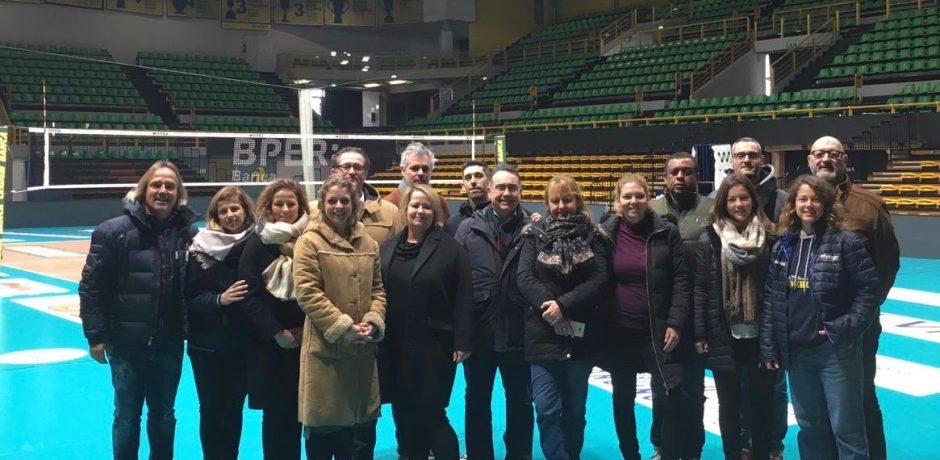
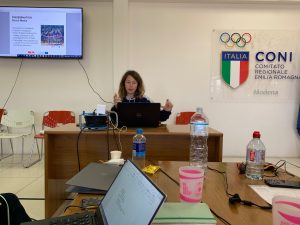
In focus of the first day have been the recent working packages and their current status. Associació Esportiva Carles Vallbona (SPA) gave an update on the current project management status, followed by a presentation and discussion of the “pilot program” developed by De SportMaatschappij Foundation (NED).
EAS (MLT) presented the preparation for the selection & set-up of an “International Women DC Ambassador Network” and the next steps following, when the interviews based on the guidelines will be delivered by the involved clubs.
During a break, participants have had a guided tour through the “Dome” of the most successful Volleyball Club in Italy, Pannini Modena and met the former top player and actual coach of the German National Team, Andrea Giani.

After that, the clubs presented their activities related to the pilot program and their activities within the project itself.
University Ljubljana presented then the design of the monitoring and evaluation methodology, Partners’ role – Structure of partners providing data – Intellectual Output and the planned intellectual output.
The first day ended with a common panel discussion with the partners of the SCORES E+ project, which as well contributes to Dual Career development in Europe and focuses on employability and supporting services, and therefore the topic “Promote education in and through sport with special focus on skills development”.
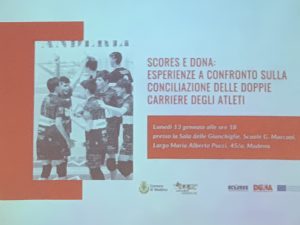
DONA is based on the ERASMUS+ Collaborative Partnership program of EU. It is coordinated by the Associació Esportiva Carles Vallbona (Spain) and involves the Malta Volleyball Association (Malta), the Scuola di Pallavolo Anderlini Soc. Coop. Sociale SD (Italy), the Associação Aventura com Carisma – Leixoes Sport Club (Portugal), Istres Provence Volleyball (France), the De SportMaatschappij Foundation (Netherlands), the University of Ljubljana (Slovenia), and the European Athlete as Student (EAS) Dual Career Network (Malta).

On December 9-10, 2019, the 3rd international meeting of the project “More than Gold” took place in Pescara, Italy. During the meeting, sections of the developed guidelines were presented and the partners agreed on how the guidelines will be tested in Universities in Latvia, Italy, Spain, Portugal and Romania and other European Union countries.

As each partner country has a very different situation in terms of dual career, the partners also agreed on common definitions for the different types of support and their terms.
In total, 6 countries participate in the project: the University of Latvia is the coordinator, while the consortium of partners consists of Alexandru Ioan Cuza University (Romania), Catolica University of San Antonio de Murcia (Spain), University of Coimbra (Portugal), University degli Studi “G. d ‘ Annunzio “Chieti – Pescara (Italy) and the non-governmental organization” The European Athlete as Student “(Malta).
The project will last for 2 years and is co-funded by the European Union Erasmus Sport program. As the result of the project first of all will develope Guidelines for HEI, which each partner organization can submit to Ministry responsible for education in the country (for example, Ministry of education and science) and afterward Ministry can recommend using Guidelines for all HEI in the country. Second – HEI will have Methodology material on how to easily use already existing activities and services for Dual Career support.
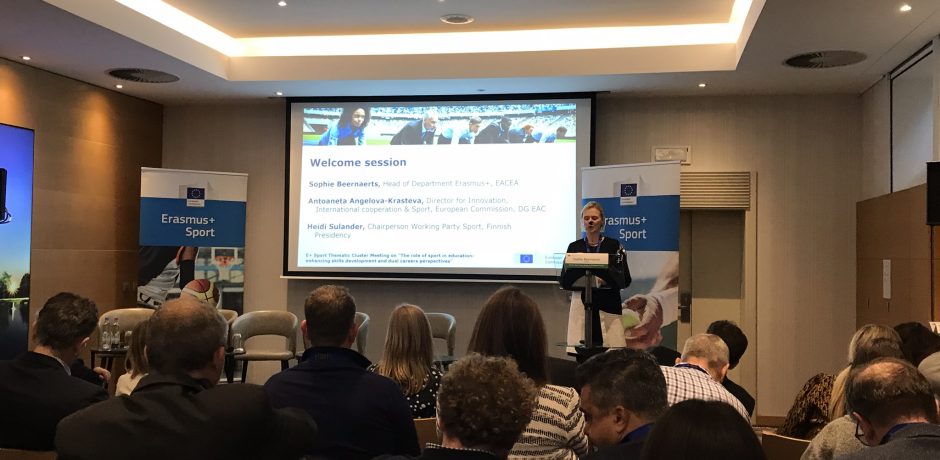
On December 4th and 5th, in Brussels a ERASMUS+ Cluster Meeting was organized by the Education, Audiovisual and Culture Executive Agency and the Sport Unit of the European Commission.
Topic was „The role of sport in education: enhancing skills development and dual careers perspectives“.
The meeting was an opportunity for stakeholders and Erasmus+ funding recipients to meet, monitor projects’ implementation, collect information on best practices, identify relevant outcomes and provide synergies across the sectors. EAS was represented by President Laura Capranica (Rom), Treasurer Mojca Doupona-Topic (Ljubljana) and former Secretary General and still EC member Joerg Foerster (Hamburg)

This third Erasmus+ Sport Cluster meeting focuses on the promotion of education in and through sport with special focus on skills development and implementation of the EU guidelines on Dual Careers of Athletes. The meeting’s objective was also to identity good practices which can be used as a basis for the new generation of sport calls for proposals.

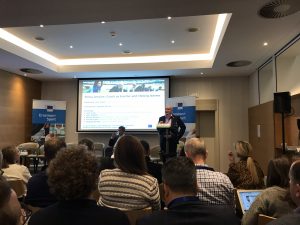
The program included sessions on Dual career – from theory to reality, and Coach as teacher and lifelong learner, with High level policy session on What can we learn by practicing sport? and three thematic workshops: #BeAble on combining education and/or work with a sport career, #BeMore on skills through participation in sport activities and #BeBetter, focusing on coaching in a changing society.
EAS is actually contributing to the activities of projects focused on migrating athletes (AMID), women athletes (DONA), a positive image of athletes as students (EDU MEDIA), dual career parents (EMPATIA), guidelines for higher education institutes (More than Gold), the role of sports in high school (SoS), and the development of dual career toolkit (Starting 11). The Cluster meeting was also an opportunity to meet the partners and discuss progress of existing projects, as well as to explore new possibilities of cooperation.
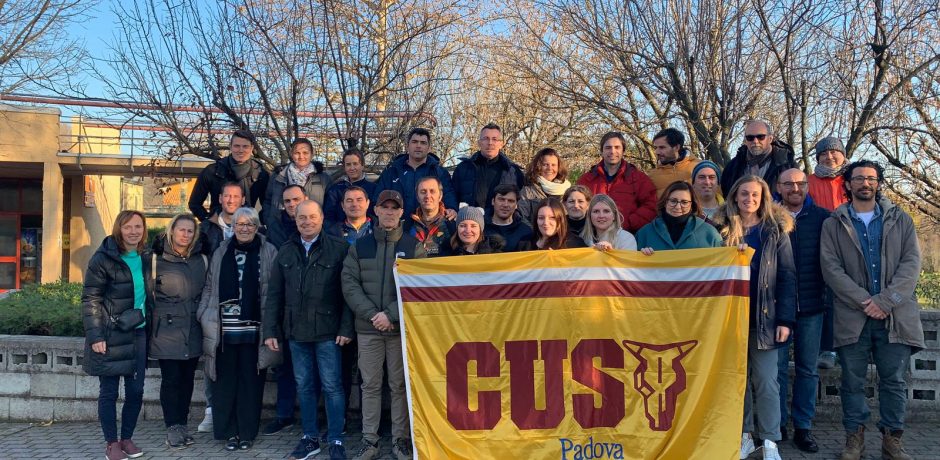
From 4 to 6 December 2019, CUS Padova hosted the 3rdtransnational meeting of the Sport Opens School project, co-funded by the Erasmus+ Program of the European Union.
It has been a 3-day training where high school physical education teachers of the partner Schools have learned how to implement the new physical education teaching method developed in the project.
The multidisciplinary team of experts in charge of developing the new teaching method had the occasion to discuss their teaching proposal with the teachers, addressing the 3 main subjects of the module: Physical Activity and Health; Fair play and Integrity; Life and Employability Skills. Trainers and teachers have interacted through experiential learning method and teamwork activities. What teachers have experienced during the training will be the base for the experimentation of the module with students in their schools that will start in January 2020.
Special thanks to the trainers of CUS Padova, project coordinator, an all partners that have developed the training activities (Italian National Olympic Committee – Italy; Bacău-Romania School Inspectorate; and European Athlete as Student network – Malta).
Also thanks for their active participation to all physical education teachers from Instituto N.ª Sra da Encarnação – Cooperativa de Ensino, Benedita – Portugal; Newton – Pertini Institute of Higher Education – Italy; Budapest VI. Kerületi Kölcse y Ferenc Gimnázium – Hungary.
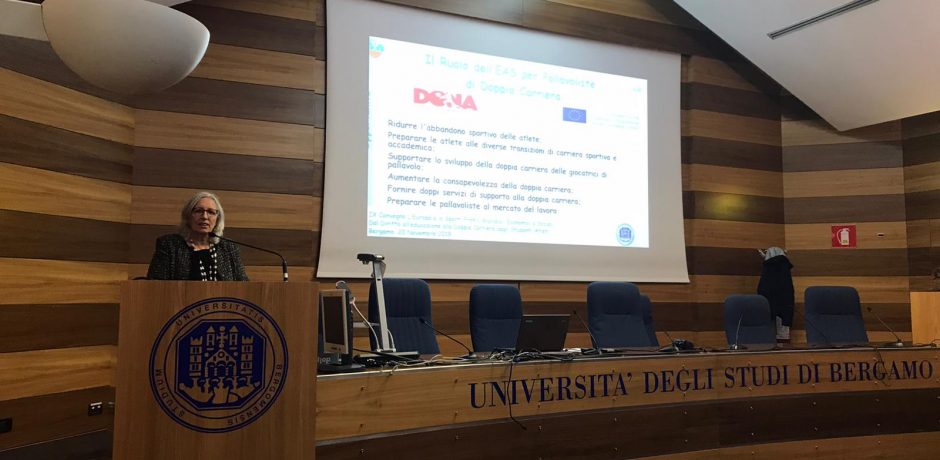
EAS President Prof. Laura Capranica presented the DONA EU project in Bergamo, Nov. 20, 2019, at the – IX Conference Europe and Sports: Legal, Economical, and Social Profiles. From the Education Rights to the Dual Career of the Student-Athlete.
INFORMATION about DONA
DONA is based on the ERASMUS+ Collaborative Partnership program of EU. It is coordinated by the Associació Esportiva Carles Vallbona (Spain) and involves the Malta Volleyball Association (Malta), the Scuola di Pallavolo Anderlini Soc. Coop. Sociale SD (Italy), the Associação Aventura com Carisma – Leixoes Sport Club (Portugal), Istres Provence Volleyball (France), the De SportMaatschappij Foundation (Netherlands), the University of Ljubljana (Slovenia), and the European Athlete as Student (EAS) Dual Career Network (Malta).
DONA aims to:
- decrease female athletes’ dropout from sport clubs;
- prepare athletes from an early age for the different transition periods ahead with developing the needed skills and competences;
- increase the number of professional and elite female volleyball players by retaining talents at clubs and supporting their DC development;
- make young athletes and their families aware that it is possible to aim for both educational and sports career;
- help them finding the right balance between sports and education with providing them the needed support services;
- prepare these athletes for their upcoming challenge to be successful in the change from elite sport to labour market – for the “career after the career”.
REG. NUMBER: Voluntary Organisation registration VO/1270
PIC NUMBER: 913459865
Email: info@dualcareer.eu