
July 2026
Online Transnational Meeting of the FIND ME Project

On July 22, 2026, the FIND ME Erasmus+ consortium held an online project meeting attended by all the representatives of the partner institutions. The meeting focused on reviewing the current status of project implementation, monitoring progress across the ongoing work packages, and coordinating the next steps necessary for the successful achievement of project objectives.
During the meeting, partners provided updates on their respective activities and discussed the implementation of the current work packages and related project deliverables. Particular attention was given to the progress achieved so far, the challenges encountered, and the upcoming deadlines. The consortium confirmed that the project is progressing according to the planned timeline, while emphasizing the importance of maintaining close communication and coordination among partners during the forthcoming implementation period.
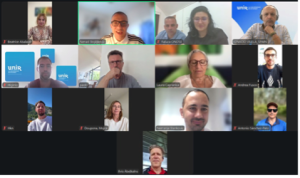
A significant part of the meeting was dedicated to the further development of the FIND ME online platform and the network of universities and faculties involved in supporting the dual career of student-athletes. Partners analysed the current number of registered higher education institutions, exchanged experiences regarding institutional outreach, and agreed on additional activities aimed at encouraging more universities and faculties to join the platform. Increasing the visibility and geographical coverage of the platform was identified as one of the key priorities for the coming months.
The meeting concluded with an overview of the agreed action points, responsibilities, and deadlines. All partners reaffirmed their commitment to the successful implementation of the FIND ME project and to strengthening collaboration in promoting sustainable dual career opportunities for student-athletes across Europe. The outcomes of the FIND ME project will be presented during the upcoming EAS Annual Conference to be held in Oulu, Finland next October 5-7, 2026.

The FIND ME project is funded by the European Union. Views and opinions expressed are however those of the author(s) only and do not necessarily reflect those of the European Union or the European Education and Culture Executive Agency (EACEA). Neither the European Union nor EACEA can be held responsible for them.
On July 19, 2026, the last in-person meeting of the Erasmus+Sport Collaborative Parnership Discovering University Sport and Supporting Dual Career (DiscoverU) was organized in Salerno during the 2026 EUSA Games.

Coordinated by the European University Sports Association (EUSA) Institute, the consortium encompassed the European Athlete Student (EAS) network, the Croatian Academic Sports Federation (CASF / HASS), the Hungarian University Sports Federation (HUSF / MEFS), the University Sports Association of Poland (AZS), and the University of Salerno (Italy) in cooperation with CUS Salerno.

During the 3-year of the project life course, European university sports administrators and dual-career experts aimed to promote healthy academic lifestyles by introducing new sports activities and to support the dual career of student athletes reinforcing the university systems.
In Salerno, partners reviewed the local sport activities and the events initiated and progressed during the project, highlighted the evolution of the university dual career systems at national levels, and fine-tuned upcoming project deliverables.
The participants had also the opportunity to attend the EUSA Forum and the Opening Ceremony of the 2026 EUSA Games.
The DiscoverU project is funded by the European Union. Views and opinions expressed are however those of the author(s) only and do not necessarily reflect those of the European Union or the European Education and Culture Executive Agency (EACEA). Neither the European Union nor EACEA can be held responsible for them.
 On July 20, 2026, the University of Salerno (Unisa) hosted a panel on Student-Athletes and Dual Career, within the framework of the European University Games 2026. After offering a concise overview of European approaches to dual career, personalized academic pathways, and the psychological and institutional conditions that support student-athletes, Prof. Francesca D’Elia (Unisa) moderated the panel of leading experts in sport policy, higher education, and wellbeing.
Laura Capranica (EAS President) highlighted the European policy framework connecting sport, education, and health. She emphasized cooperation among institutions, cultural diversity across Member States, and the need for structured dialogue between sport and education stakeholders. Speciafically for the University context, she highlighted the relevance of the European cooperation projects Give Sport a Say under the Citizens, Equality, Rights and Values (CERV), and the Collaborative Partnerships DiscoverU, Edmedia, Find Me, More Than Gold, and Runners4All under the ERASMUS+Sport.
Andreas Csonka (EUSA EUSA Executive Committee Member) framed dual career as a wellbeing, education, and talent policy, stressing predictable flexibility, full academic choice, and institutional reliability. He underlined the role of EUSA in enforcing the European principles: flexibility in models, consistency in outcomes, and no forced dropout.
Gaetano Raiola (Pegaso University) presented the transition from the school Personalized Learning Pathway (PFP) to university dual career programs. He illustrated regulatory tools, flexible exam scheduling, tutoring schemes, and the recognition of certified sporting activities through Italian Ministerial Decree 931/2024, enabling coherent and personalized academic pathways.
Ruggero Andrisano Ruggieri (Unisa) explored the psychological dimension of dual career through the “Double Family” construct, describing relational tensions between family, sport, and university. He proposed the university as a third space supporting autonomy, coordination, and wellbeing through mapping, clarification, direct communication, and monitoring.
Antonella Apicella, Captain of Salernitana Women Soccer Team, presented the challenges and opportunities of a university student-athlete, offering further for the implementation of dual career support policies and provisions.

The discussion reinforced a shared message: dual career requires coordinated systems, personalized pathways, and attention to wellbeing. The University of Salerno expressed its commitment to advancing dual career initiatives and exploring a dedicated institutional regulation aligned with European recommendations and the mission of EAS and EUSA.
The DiscoverU, EdMedia, Find Me, Give Sport a Say, More Than Gold, and Runners4All projects are funded by the European Union. Views and opinions expressed are however those of the author(s) only and do not necessarily reflect those of the European Union or the European Education and Culture Executive Agency (EACEA). Neither the European Union nor EACEA can be held responsible for them.
On July 18 2026, the University of Salerno in cooperation with CUS Salerno hosted the 2026 EUSA Forum “Empowering University Sport: Grassroots & Innovation” attended by representatives from universities, university sports organisations, and international partners who have the responsibility to enhance the impact of sports knowledge and best practices to foster healthy lifestyles in the academic environments and the society at large.

The President of EUSA, Mr. Haris Pavletic, welcomed the participants and presented the EUSA’s 2025-2029 strategic vision, particularly focused on the development of the students’ health, education, and personal development in and through sport. The University of Salerno Rector, Prof. Virgilio D’Antonio, and the President of CUS Salerno, Mr. Lorenzo Lentini, emphasized their satisfaction in hosting the EUSA Games for the first time in Italy, which could promote a strong legacy for enhancing physical activity and healthy behaviours in the Campania population.

The keynote speech of Mr. Antonio Parrilla, Italy’s Representative at the Council of Europe’s EPAS Governing Board Bureau, presented the relevance of the Revised European Sports Charter and its values of integrity, inclusion, and human dignity, which should be supported by institutional responsibility and structural funding.
The Forum encompassed two panel discussions. The first panel focused the future of inclusive and sustainable university sport with the contribution of Mr. Vincenzo Cusati, Sport Educator and Mental Coach from CUS Salerno, Mr. Peter Juhasz, Secretary General of the Hungarian University Sports Federation (MEFS), Mrs. Marija Panijan from the Croatian Academic Sports Federation, Mrs. Marianna Pikul from the University Sports Association of Poland (AZS), and Mr. Liam Smith, EUSA Director of Sports Events, moderated by Mr. Andrej Pisl EUSA Director of Projects & Policy. The discussion presented the importance of innovation, supportive policy frameworks, scientific data and international cooperation for enhancing grassroots sport engagement of the majority of sedentary university students and for preventing academic or sport dropout of athletes through dual career programmes.

The second panel focused on the strengthening the long-term impact of university sport through institutional cooperation with the contribution of Prof. Francesco Paolo Adorno, Rector’s Delegate for University Sports Policy and Relations with CUS at the University of Salerno, Mr. Bruno Barracosa, EUSA 1st Vice-President and former President of the Portuguese University Sports Federation, Prof. Laura Capranica, President of the European Athlete Student (EAS) network, Mr. Leonz Eder, President of the International University Sports Federation (FISU), and Mr. Philippe Housiaux, President of the European Fair Play Movement (EFPM), moderated by Mr. Andreas Csonka, EUSA Executive Committee Member. Key themes explored the needs of students in a fast changing society, the effective approaches to elicit active lifestyles in the academic environment, the cooperation of different stakeholders in sharing visions and responsibilities, and the importance to monitor progress. The relevance of monitoring the efficacy of policies and services for allowing students to combine sport, study, and social life was highlighted, as well as the need of cooperation to share best practices across Europe for enhancing fair play, safeguarding, ethical governance, and supportive environments.
Ledger Live Mac Cannot Be Opened: Recover From a Startup Stall Safely
Resolve Ledger Live Mac Cannot Be Opened complaints by matching the symptom to its layer: a security quarantine block, an orphaned background process, or a device handshake that fails after the window renders. Each layer leaves a different trace on screen, and the trace tells you which check to run first. The whole sequence takes minutes and never requires a recovery phrase or a device reset.
The sections below move from mechanism to comparison to verification, and every claim that depends on a version number is pointed at the vendor’s published page rather than asserted here.
Why the Desktop Client Stalls Before Its Window Renders
Four mechanisms account for nearly every stalled start: an operating-system quarantine flag, a stale background process, an unsupported system build, and a corrupted local data folder. Each leaves a different trace, and identifying the trace first prevents reinstalling an application that was never the problem.
The Quarantine Flag Applied to Fresh Downloads
Apple’s Gatekeeper marks every file fetched through a browser with a quarantine attribute, and an application that has not been notarized is stopped before its first window appears. The block is deliberate, not a defect. The Privacy & Security pane in System Settings records the decision and offers a way to allow the blocked item to run anyway; once you use it, the flag clears for later launches. If no such control appears, the download was likely damaged in transit and should be fetched again from the manufacturer’s own page.
A Background Process That Never Exits
When the client crashes during shutdown, its helper processes can survive the crash and hold a lock on the local database, so the next launch waits indefinitely with no window and no error. Launch Activity Monitor, search for the vendor’s process names, and quit each one before trying again; restarting the machine achieves the same result. Repeatedly relaunching without clearing the orphaned process is the most common reason a fix appears to fail.
Local Data Folders That Survive a Reinstall
Reinstalling does not touch the folder the application keeps inside your user Library, so a corrupted index or a half-written cache persists through every fresh install. Renaming that support folder forces a new one to be built on the next start, which clears the fault while leaving the original data available if you need it. Accounts and balances are derived from the handheld device, so an empty local folder costs a re-sync, not your holdings.
Which Apple Setups and Device Generations Run Into This?
The failure clusters around three groups: machines running an operating-system build older than the application’s stated minimum, Apple silicon computers running a build compiled for Intel processors, and devices whose firmware predates the current companion application. A machine that started the client successfully last month can still fall into the first group after an automatic system update.
Older System Builds and the Stated Minimum
Every release lists a minimum supported system build on its download page, and the client refuses to start when a machine falls below it. That requirement moves forward as the vendor drops support for older releases, so a computer that was fine two years ago may now sit outside the window. Check the version in the About panel of the Apple menu against the published minimum; if the system is below it, updating the operating system is the only supported route.
Apple Silicon Running a Translated Build
Builds compiled only for Intel processors run on Apple silicon through a translation layer, which adds start-up delay and, on some system releases, prevents the window from rendering at all. Installing the build matched to your processor family removes that layer entirely. You can tell which one is present by viewing the application’s information panel and reading the Kind field, where a translated build is listed as Intel rather than Apple silicon.
Firmware and Client Versions That Must Move Together
The handheld device and the desktop client negotiate a protocol version at connection, and a wide gap between them produces a handshake that stalls or a prompt to update the device. Newer device firmware often demands a specific minimum client release, and the reverse also holds. Confirm both numbers on the manufacturer’s page, then update the client first, because the device update itself runs through the client.
Alternative Routes to the Same Accounts When the Installed Build Fails
If the installed build will not start and you need access to your accounts, other routes still reach the same wallet: a second Apple machine, the handheld application on a phone, a browser-based hardware bridge, and a third-party interface that speaks the same device protocol.
The table compares five ways of reaching the same accounts when the installed desktop build is unavailable. Each row is judged on what it suits, the main limit it carries, and how a user can confirm it works before moving funds. None of these routes changes where the keys exist; the handheld device remains the only place they are stored.
| Route | Best for | Main limit | How to confirm it works |
|---|---|---|---|
| Native build for the machine’s processor family | Daily use on current Apple hardware | Requires a release published for that processor | Window renders and the device is recognised |
| Build compiled for Intel processors on Apple hardware | Machines that ran the client before | Translation layer can stall the first launch | Application appears and accounts sync |
| Handheld application paired over Bluetooth | Checking balances away from a desk | Pairing must be redone after device updates | Device screen shows the pairing request |
| Browser-based hardware bridge | One-off access from a borrowed machine | Permission granted per browser session | Browser prompt names the connected device |
| Third-party interface using the same device protocol | Users who want a different interface | Updates and support sit outside the vendor | Addresses match the device screen |
The native build fits whenever the machine meets the published minimum; it does not fit when no release exists for that processor family. The handheld route suits verification and transfers away from a desk, but it does not replace a full desktop sync on every firmware version. A browser bridge is the fastest way to check a balance from a machine you do not control, yet it should never be used to type a recovery phrase anywhere. Third-party interfaces suit users who accept responsibility for their own updates and support; they do not suit anyone who wants vendor-issued guidance.
Why Processor-Matched Builds Avoid the Translation Layer
A build compiled for the machine’s own processor family removes the translation layer that sits between the application and the system frameworks. That layer is where most start-up stalls on Apple silicon begin, and it also slows the device handshake. The matched build is not faster in every operation, but it eliminates a class of failures the user cannot fix from their side. Where both variants are offered, the processor-matched one is the default choice.
What a Browser Bridge Leaves Out
A browser bridge reaches the device through a hardware permission prompt, so the session ends when the tab closes and nothing is written locally. That design suits a quick balance check, and it does not perform firmware updates, which need the desktop or handheld client to hold a connection for several minutes. It also does not restore accounts from a recovery phrase, and it should never be asked to. Treat it as a read-mostly tool rather than a replacement for the installed application.
Mistakes That Turn a Start-Up Stall Into a Permanent Loss
Three actions cause damage that no support article can undo: typing a recovery phrase into any window that is not the hardware device itself, downloading a replacement build from a search advertisement, and resetting the device to force a connection. Each is offered as a fix somewhere online, and none of them is a fix.
Recovery Phrases Entered Outside the Device
The recovery phrase is the wallet; anything that holds it holds the funds. No start-up problem is solved by entering it into a browser, a chat agent or a replacement application, because the phrase is only needed when restoring an account onto a device. A client that will not start never asks for it. If a page or a person does, the interaction is an attempt to take the wallet, and the phrase should be treated as compromised from the moment it is typed.
Downloads Served by Search Advertisements
Search results for the client’s name frequently place paid advertisements above the official listing, and those landing pages distribute installers that behave normally until they request the recovery phrase. The only reliable check is the domain itself, typed by hand or taken from a bookmark, never the page title or the padlock icon. A legitimate installer is also signed and notarized, so a system warning about an unidentified developer is a signal to stop rather than a step to click past.
Device Resets Used as a Troubleshooting Step
Wiping the handheld device clears the keys it holds, and the only way back is the recovery phrase. That action is legitimate when a device is lost or when the phrase is being moved to new hardware, and it is never a legitimate response to a client that will not start, because the fault sits on the computer. Support pages recommending a reset for a launch failure are describing a different problem. If a reset has already happened, stop and restore from the phrase on the device itself.
How Do You Confirm a Clean Start Without Risking Your Funds?
The procedure below separates a blocked launch from a broken installation in five checks, and it never requires the recovery phrase, a device reset, or an installer from anywhere other than the vendor’s own domain. Have the machine’s system version, the device model and the client release ready before starting.
Step 1: Read the exact wording of the block
Write down the exact message the system shows when the launch is refused, because the wording separates a security block from a crash. A message naming an unidentified developer points to a quarantine decision, while a silent stall points to a process or data problem.
Step 2: Check the system and client versions against the published minimum
Compare the installed system build and client release with the minimums listed on the manufacturer’s official page, because an automatic system update can move a machine below the supported line. Recording both numbers before changing anything stops you from chasing a fault that is really an unsupported configuration.
Step 3: Clear orphaned background processes
Launch Activity Monitor, search for the vendor’s process names, and quit every one of them before starting the client again. A surviving helper process keeps the local database locked, so a fresh launch waits without ever showing a window.
Step 4: Move the local support folder aside
Rename the application’s folder inside your user Library rather than deleting it, then start the client and let it rebuild the folder. Keeping the original makes the change reversible, and rebuilding clears a corrupted index that survives a normal reinstall.
Step 5: Re-download only from the manufacturer’s domain
Fetch a fresh installer by typing the vendor’s domain into the address bar, then confirm the signature and the processor build before running it. Search advertisements and mirror sites distribute installers that look identical and ask for the recovery phrase later.
What Changes Between Releases and What People Still Get Wrong
Minimum system requirements, supported processor builds and the location of the download page all move between releases, and none of them are announced in a way a user is likely to see. Three beliefs also persist: that reinstalling clears everything, that the browser route is a full replacement, and that a blocked launch means the wallet is damaged.
Where the Current Requirements Are Published
Every release states its minimum system build, supported processors and download location on the vendor’s official download page, and that page is the only place where those numbers are authoritative. Community posts and video walkthroughs go stale within a release cycle and often describe menus that no longer exist. Before following any instruction, check its publication date against the release you have installed, and treat anything older than the current release as background reading rather than a procedure.
Reinstalling Rarely Touches the Faulty Component
The installer replaces the application bundle and leaves the user Library folder untouched, which is exactly where corrupted indexes and half-written caches live. That is why the same failure reappears after a clean reinstall, and why the folder move in the verification sequence is the step that usually clears it. Reinstalling is still worth doing when the bundle itself is damaged, but it should follow the folder check rather than replace it.
A Blocked Launch Says Nothing About the Keys
The keys never leave the handheld device, so a client that will not start does not damage, expose or change them. Balances displayed in the application are a reading of the chain, not the wallet itself, and they reappear once the client runs again and the device reconnects. Users who understand this avoid the two actions that actually cause loss: typing the phrase into a computer and wiping the device out of frustration.
Resolve Ledger Live Mac Cannot Be Opened is a phrase that nearly always traces back to Gatekeeper, the launch-time verification layer in Apple’s desktop system, rather than to a corrupted installation. When the operating system quarantines a download, it holds the bundle until someone approves it explicitly under Privacy & Security. The sections below explain what that check inspects, which override routes exist in current releases, and how to confirm a binary is genuine before granting it an exception.
How Gatekeeper Blocks a Launch and What Open Anyway Changes
Gatekeeper stops the first launch of any bundle that carries a quarantine attribute and lacks a valid Developer ID signature or a notarization ticket, showing a dialog with no bypass control inside it. Choosing Open Anyway writes a one-time exception for that exact build, and later launches of the same version start without a prompt.
Quarantine Flags Attached at Download Time
Safari, Mail and most third-party browsers attach the com.apple.quarantine extended attribute to every file they save, and that attribute is what routes a first launch into the Gatekeeper evaluation. The flag travels with a file copied between volumes, yet it is stripped when an archive is unpacked by utilities that ignore extended attributes, which explains why two people using the same installer sometimes see different dialogs. Inspect it with xattr -l on the bundle; when no quarantine attribute is listed, something other than Gatekeeper is holding up the start.
Signature and Notarization Checks Performed Before the Window Appears
Gatekeeper validates the Developer ID certificate chain, confirms the certificate has not been revoked, and looks for a notarization ticket issued for that specific build. A bundle signed ad hoc, signed with an expired certificate, or notarized after distribution fails this evaluation even though it runs without complaint on the developer’s own hardware. The dialog wording reflects which check failed: an unidentified developer message points at signing, while a damaged or move-to-trash message points at a broken ticket or a binary altered after signing.
What the Override Leaves Untouched
Open Anyway does not erase the quarantine attribute, does not whitelist the developer, and does not exempt later releases from the same review. The exception covers one bundle identifier at one version, so shipping a new build resets the process and the prompt returns. System Integrity Protection, malware definitions, and per-application privacy prompts continue to apply exactly as before, which makes the override narrower than the wording of the dialog implies.
Who Sees This Prompt and When the Override Applies?
The prompt reaches anyone installing software distributed outside the App Store when the bundle is unsigned, signed with a revoked certificate, or missing a valid notarization ticket. It appears once per user account and per build, and it also returns when a developer’s certificate lapses between releases.
Direct Vendor Downloads and Self-Contained Installers
Software shipped as a disk image, a zip archive, or a signed package from a vendor’s own site is the usual source of this dialog, because nothing along that distribution path performs App Store review. Beta channels, legacy builds still offered for older hardware, and utilities from small studios fall into the same group. The prompt is expected here, and the decision rests on whether the signing identity matches the name printed on the download page.
When the Dialog Signals a Tampered or Repackaged File
A download from a mirror, a file-sharing link, or a bundled installer can produce the same dialog while the underlying binary was altered after signing, and the system reports that case as a damaged bundle rather than an unidentified developer. Comparing the SHA-256 hash against the publisher’s published value separates the two situations in under a minute. If the hashes differ, delete the file instead of overriding, since the signature no longer covers what is inside.
Supervised and Work-Issued Hardware
On a device enrolled in a mobile device management program, the Privacy & Security panel may hide the override or show it greyed out, because the configuration profile sets allowed application sources and can revoke local exceptions. The same applies to shared lab computers and school-issued laptops. In that situation the local route is unavailable, and the administrator who owns the profile has to adjust the policy or approve the bundle.
Override Routes Compared: Settings Toggle, Context Menu, and Terminal
The supported route in current releases runs through System Settings, then Privacy & Security, where a blocked item appears with an Open Anyway button after a failed start. Older releases accepted a context-menu launch from the Finder icon, and a Terminal command that deletes the quarantine attribute reaches a similar end by a wider path.
Four routes exist and they are not interchangeable: they differ in where the control sits, how much of the system the exception covers, and whether the change survives a system update. The table compares them on those criteria, so the reader can match a route to the situation in front of them.
| Route | Where it lives | Scope of the exception | Main limit |
|---|---|---|---|
| Settings toggle | Privacy & Security panel | One bundle, one build | Needs a failed start attempt first |
| Context-menu launch | Finder icon menu | One bundle, one build | Withdrawn in system version 15 |
| Quarantine attribute removal | Terminal, xattr -d | One bundle, persists after updates | Leaves no approval record |
| Verification layer switched off | Terminal, spctl –master-disable | Every application on the device | Broad exposure until re-enabled |
| Store distribution | Store listing | No exception required | Publisher must offer the build there |
The Settings toggle fits a one-off installation from a publisher you have already checked, and it is the route Apple documents for current releases; the exact wording is published in Apple’s guidance on opening software from an unidentified developer at Apple’s help page. The context-menu shortcut no longer bypasses the check in version 15 and later, so any walkthrough mentioning it describes a system several releases old. Stripping the quarantine attribute suits scripted deployments where nobody can answer a dialog by hand, yet it records nothing about who decided. Switching the verification layer off system-wide reverses with spctl –master-enable, but until that command runs nothing on the device is checked. The store row applies only when the vendor distributes the build there; where updates ship from the vendor’s own servers, that option does not exist.
Where the Privacy & Security Toggle Records Its Exception
The button writes an approval tied to the bundle identifier and the code directory hash of the build that failed to start, which is why replacing the application with a newer release brings the dialog back even though the panel entry looked permanent. From version 13 onward the control sits under Privacy & Security instead of the older preferences layout, and the entry itself can disappear once the application has started successfully. Nothing in the panel lists historical approvals, so there is no built-in audit trail of what was allowed.
What Removing the Quarantine Attribute Skips
Running xattr -d com.apple.quarantine against a bundle deletes the marker that triggers evaluation, so the application starts with no dialog and no record of who approved it. The command affects only the path you name and must be repeated for every copy and every fresh download, since browsers and mail clients rewrite the attribute at save time. It does not weaken signature checks for anything else on the device.
Risks, Limits, and Common Mistakes Around Open Anyway
The exception is not a lasting trust decision: it covers one build, it vanishes when the bundle is replaced, and it is stored only in the local approval record. Treating it as blanket permission is the mistake that matters most, followed closely by granting it to a file whose hash was never compared against the publisher’s published value.
Approvals Lost When the Bundle Changes
Every new version carries a different code directory hash, so the previous approval no longer matches and the dialog reappears after an update. Users who assume a single click solved the problem permanently are surprised by this, and some respond by disabling verification system-wide rather than repeating a two-click decision. Repeating the panel step per release is the narrower choice.
Downloads That Reintroduce the Quarantine Flag
Fetching the same archive again through a browser writes a fresh quarantine attribute even if the file name and contents are identical, because the flag is applied by the saving application rather than carried inside the archive. Transfers over AirDrop, network shares, and external drives can add their own attributes as well. Re-downloading is therefore not a way to clear the dialog.
Reading the Dialog as a Malware Verdict
The dialog states that the developer could not be verified, which is a statement about paperwork, not about behavior. Unsigned code from a reputable studio and signed code from a hostile publisher produce different messages, and neither message is a scan result. Malware definitions and notarization lookups are separate processes that run regardless of which button the user presses.
How Do You Verify the Software Is Genuine Before Choosing Open Anyway?
Verification takes a few minutes and needs three things: the application bundle, a Terminal window, and the checksum or signing details the publisher lists. The aim is to confirm the download came from the developer named on the certificate and that the signature still covers the code, so the exception you grant applies to a binary you have identified.
Step 1: Compare the download’s hash with the publisher’s listed value.
Run shasum -a 256 against the file you downloaded and match the output against the checksum on the vendor’s page. A mismatch means the file changed after it was published, and no override should be granted.
Step 2: Read the code signature carried by the bundle.
Execute codesign -dv –verbose=4 on the application bundle and read the Authority and TeamIdentifier lines. Those fields name the certificate holder, and an ad-hoc or absent signature explains the block without implying tampering.
Step 3: Inspect which application attached the quarantine attribute.
Use xattr -l on the bundle and read the timestamp and agent name inside the com.apple.quarantine value. The entry shows which program saved the file and when, which confirms whether the download path matches what you intended.
Step 4: Ask the assessment tool for the exact rejection reason.
Run spctl –assess –type execute –verbose on the bundle and read the rejection line it prints. The reason distinguishes an unsigned or unnotarized build from a revoked certificate, and that difference decides whether an override is reasonable.
Step 5: Grant the exception and confirm the outcome.
Press Open Anyway in Privacy & Security, then launch the application and reopen the panel to see whether the entry remains. A successful start with a stable panel entry means the exception applied to the build you checked.
Which Details Shift Between Versions and What People Get Wrong?
Two things move between releases: where the override control lives and whether a keyboard shortcut still works. The Settings panel replaced the older preferences pane in version 13, and the context-menu shortcut stopped bypassing the check in version 15, so anything beyond those two changes belongs on the vendor’s own help page rather than in version-specific write-ups.
Panel Names and Locations by Release
Before version 13 the controls sat under Security & Privacy inside System Preferences, and the dialog itself offered a direct button in many builds. Version 13 and later moved the same settings under Privacy & Security in System Settings, with a different arrangement of rows. Instructions written for one layout rarely match the other, which sends people hunting for a control that relocated rather than vanished.
The Button Appears Only After a Failed Start
Privacy & Security lists the blocked item only once the user has tried to start the application and dismissed the dialog, because the entry is generated from the failed attempt. Opening the panel first shows nothing, which leads many people to conclude that the option was removed. Attempting the start, dismissing the message, then visiting the panel is the order that works.
Signing, Notarization, and Quarantine Are Three Separate Checks
Quarantine is an attribute written at download time, signing is a certificate applied by the developer, and notarization is a ticket issued after an automated review by the platform vendor. A bundle can be signed and not notarized, notarized with a stale ticket, or notarized correctly while still carrying a quarantine flag. Untangling which of the three is involved determines whether an override is sensible or merely hides a real problem.
Q&A:
Why does my Mac say Ledger Live cannot be opened because Apple cannot check it for malicious software?
That message comes from macOS Gatekeeper. It often appears when the app was downloaded from the internet and macOS has not yet approved that copy. Ledger Live from ledger.com is signed and notarized, but the first launch can still be blocked if the file carries a quarantine flag. Move Ledger Live to Applications, right-click it, and choose Open. If the Open option is missing, go to System Settings, then Privacy and Security, find the notice about Ledger Live, and click Open Anyway. If macOS still blocks it, open Terminal and run: xattr -d com.apple.quarantine /Applications/Ledger\ Live.app. Then try opening Ledger Live again. Download the app only from Ledger’s official site.
Ledger Live opens and closes right away on my Mac. What should I try?
A launch crash usually points to a damaged download, a stale background process, or a local profile problem. Quit Ledger Live, open Activity Monitor, search for Ledger Live, and force quit any related process. Remove Ledger Live from Applications, download a fresh installer from ledger.com, and install it again. If it still closes, move the folder ~/Library/Application Support/Ledger Live to your Desktop as a backup, then reopen the app. If Ledger Live starts after that, the old local profile was likely corrupted; you can re-add accounts from your Ledger device. Also confirm your macOS version meets Ledger Live’s current requirement and that you have enough free disk space.
I downloaded Ledger Live from a third-party site. Could that be why it will not open on my Mac?
Yes. Ledger Live should come from ledger.com. Copies from other download pages, mirror sites, or unofficial stores may be unsigned, altered, or packaged incorrectly, so macOS may block them or they may fail at launch. Delete the copy you have, empty the Trash, and install Ledger Live from the official source. Do not approve an unknown app just to get it open, and do not enter your recovery phrase into any app or website that asks for it.
Do I need to connect my Ledger device before Ledger Live will open on Mac?
No. Ledger Live should open on its own without a device connected. The app interface loads first; the Ledger device is needed later for actions such as adding accounts, sending crypto, or installing apps. If Ledger Live only opens when the device is attached, reinstall the app from ledger.com. If the app opens but does not detect the device, that is a separate USB or permission issue. Try another cable, close other wallet apps, restart your Mac, and check whether macOS is allowing USB access for Ledger Live.
Can I lose crypto if Ledger Live cannot be opened on my Mac? What should I do next?
Your crypto is not stored in Ledger Live. It stays on the blockchain, and your private keys stay on the Ledger hardware device. Ledger Live is only the interface used to view and manage accounts. Do not share your recovery phrase, and do not type it into a website, chat, email, or any app that requests it. If you need access, try Ledger Live on another computer or phone, or use a compatible wallet that supports Ledger devices. For Nano X, Ledger Live mobile with Bluetooth may work. If the Mac problem continues, contact Ledger Support through the official website. Avoid resetting the Ledger device unless you have your recovery phrase and understand the restore process.
Ledger Live won’t open on my Mac after a macOS update. It bounces once and then closes. What should I check without risking my crypto?
Use the official download. If Ledger Live came from anywhere except ledger.com, delete it and get a fresh copy from Ledger. Move the app into Applications. Then try to open it. If macOS blocks it, Control-click the app, choose Open, and confirm. If you do not see that choice, open System Settings > Privacy & Security and click Open Anyway for Ledger Live. If the app still does not launch, quit every Ledger Live process in Activity Monitor. Open Terminal and run: xattr -d com.apple.quarantine /Applications/Ledger\ Live.app. Restart the Mac. If you updated macOS recently, install the newest Ledger Live version. An older build may not run on your macOS release. A bad download can also stop the app from opening. Delete Ledger Live, empty the Trash, download it again, and drag it to Applications. Your accounts and crypto are not stored only in the app. Your recovery phrase restores access on a new setup. Never enter your 24-word recovery phrase into any website or chat, and never share it with support. If the app still fails, test it in a new macOS user account. This checks whether your main profile has a permission conflict. Check Date & Time settings; a wrong date can block secure connections. Turn off any VPN, firewall, or antivirus for one launch attempt. For Intel Macs, use the Intel build. For Apple silicon, use the Apple silicon or universal build. If nothing works, contact Ledger Support with your Mac model, macOS version, Ledger Live version, and the exact error message.
On July 2-3, 2026, the University of Cagliari in collaboration with Sardegna Ricerche, the Regional Science and Technology Park of Sardinia, and the Sporting Life and Medicine Laboratory (SLAM), organized in Pula, Italy, the 5th UniCa Sport Scientific International Conference (USSIC). This event represented a meeting point for researchers, clinicians, practitioners, and institutions who believe in the impact of translating cutting-edge sports-related knowledge into real-world.

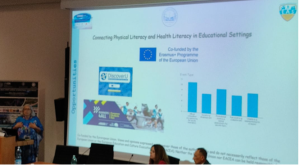
Whilst the first day was devoted to keynote, oral, and poster presentations related to bio-medical aspects of sports for physical and mental health of the practitioners, the second day encompassed key lectures and round tables on personalized training and on building sustainable pathways for student-athletes. As invited key lecturers, Laura Capranica, president of EAS and Thalia Darnanville, INSA coordinator of the SamEUROPE project presented the “European Sport and Education: An Alliance for Health” and the “SAMEurope: Erasmus+ mobility for dual career students”, respectively. Relevance was given to the EU Funded ERASMUS+ Collaborative Partnerships for universitiies, such as More Than Gold, DiscoverU, Runners for All, and Find Me.
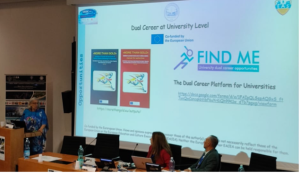
Myosotis Massidda and Filippo Tocco, organizers of the Conference, moderated the round table on dual caree. Alessandra Carucci (Rector’s Delegate for international relationships of the Universty of Cagliari), Laura Capranica (Rector’s Delegate for dual career of the Universty of Rome Foro Italico and EAS President), Thalia Darnanville (INSA, Lyon, France) Carlo Castagna (Pegaso Telematic University, Italy), Attilio Carraro (Free Uniersity of Bolzano, Italy), Susana Povoas (University of Maia, Portugal), Bruno Perra (President of the Sardinia Region Olympic Committee, Italy), Nardino Degortes (Coach of the Italian national track and field athletes 1984-2002), Fulvia Cappai (basketball player and student of law) discussed the challenges and opportunities of educational institutions and sport bodies in co-constructing a cohesive supportive entourage for sportspersons in pursuing their sport and academic careers.
Further information is available at https://www.ussic.it
The DiscoverU, Find Me, More Than Gold, Runners4All, and SAMEurope projects are funded by the European Union. Views and opinions expressed are however those of the author(s) only and do not necessarily reflect those of the European Union or the European Education and Culture Executive Agency (EACEA). Neither the European Union nor EACEA can be held responsible for them.

REG. NUMBER: Voluntary Organisation registration VO/1270
PIC NUMBER: 913459865
Email: info@dualcareer.eu